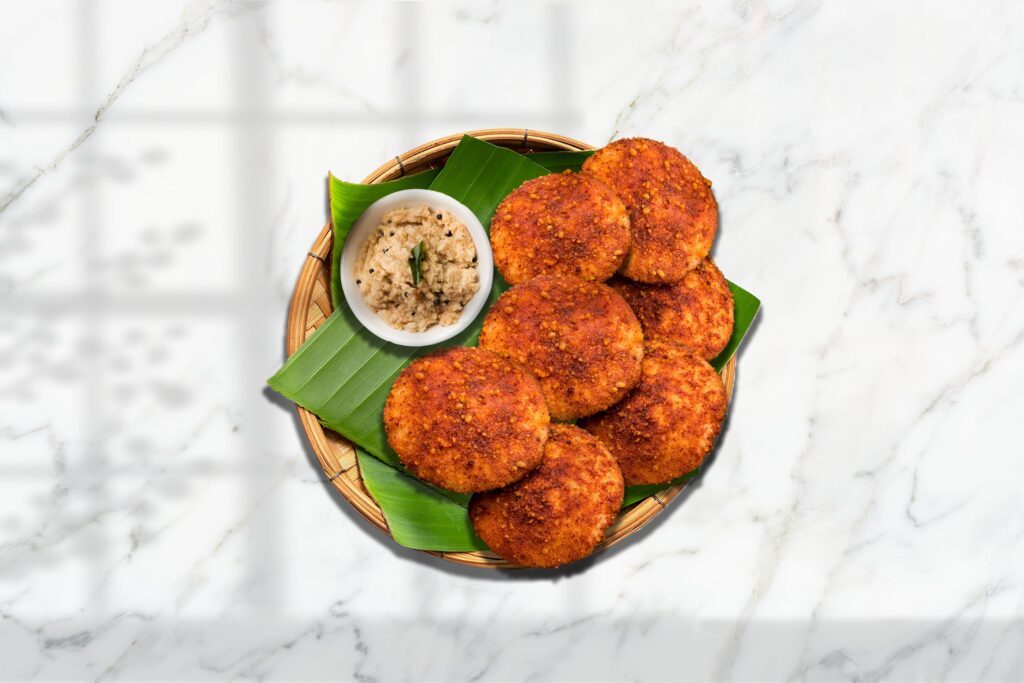
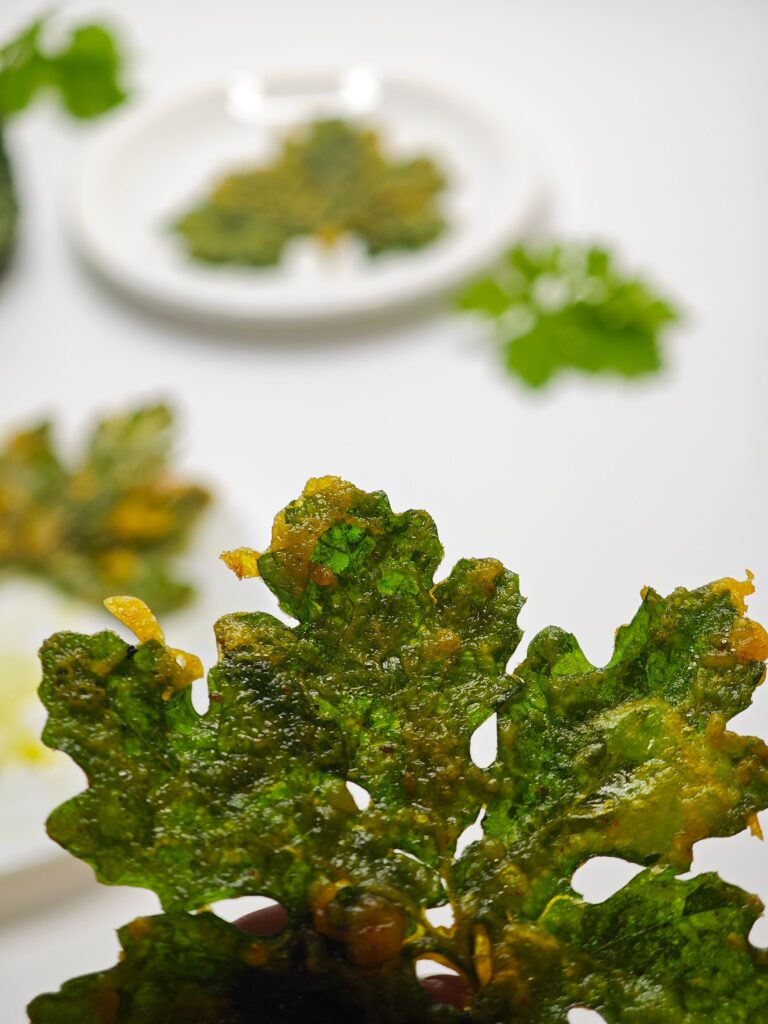
A healthy, fibre-rich and protein-packed South Indian-style Adai made with oats, fresh vegetables and paneer. Perfect for a nutritious breakfast or a light meal!
📝 Ingredients (Makes 3–4 Adai)
½ cup oats, powdered
1 medium carrot, grated
1 medium onion, finely chopped
½ beetroot, grated
100–150 g low-fat paneer, grated
½ tsp red chilli powder
1 green chilli, finely chopped
2 tsp fresh coriander, chopped
2 sprigs curry leaves, finely chopped
1–2 tsp oil, for cooking
Salt to taste
Water as required
👩🍳 Method
Grind the oats into a fine powder and transfer them to a mixing bowl.
Add the grated carrot, beetroot, onion, paneer, green chilli, coriander, curry leaves, red chilli powder and salt.
Mix everything well, adding water little by little until you get a thick, spreadable batter.
Lightly grease a banana leaf or parchment paper with a little oil. Take a portion of the mixture and spread it into a thin, even Adai.
Heat a non-stick pan and lightly grease it with oil.
Carefully transfer the prepared Adai onto the hot pan. Cook on medium-low heat until the bottom turns golden and crisp.
Gently flip and cook the other side until golden and the Adai is cooked through.
Repeat with the remaining batter.
🍽️ Serving Suggestion
Serve hot with coconut chutney, mint chutney or a bowl of fresh curd for a wholesome and satisfying meal.
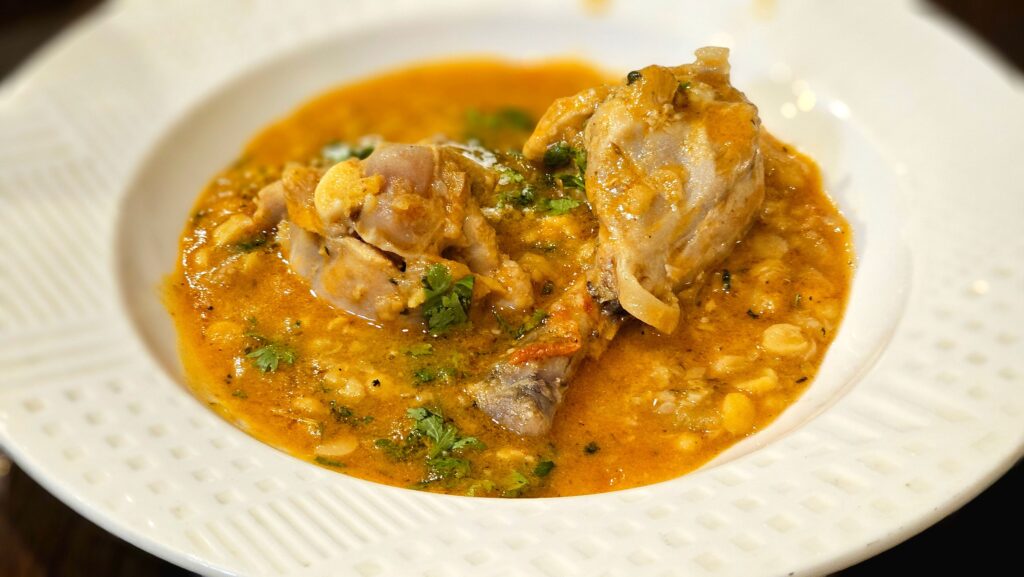
A comforting, protein-rich dal loaded with shredded chicken, three types of lentils, and a flavourful garlic tadka. Creamy, spicy, and perfect to enjoy with rice!
📝 Ingredients
For Dal & Chicken
1 cup chana dal
1 cup red masoor dal
1 cup moong dal
1–2 chicken breasts
1 onion, finely chopped
1 tbsp ginger-garlic paste
2–3 tomatoes
4–5 green chillies
1 tsp cumin seeds
1 tsp red chilli powder
½ tsp turmeric powder
1 tsp coriander powder
1 tsp Kashmiri red chilli powder
Salt to taste
Oil as required
Water as required
For the Garlic Tadka
2–3 tbsp oil
4 garlic cloves, finely chopped
1 tsp cumin seeds
A pinch of hing
3–4 dry red chillies
1 tsp Kashmiri red chilli powder
For Serving
Fresh coriander, chopped
Steamed rice
Sliced onion
Green chillies
Fresh salad
👩🍳 Method
Soak the dals: Wash chana dal, red masoor dal, and moong dal thoroughly. Soak them for 1–1½ hours.
Prepare the masala: Heat oil in a pressure cooker. Add chopped onion and sauté until golden brown. Add ginger-garlic paste and cook until its raw smell disappears.
Cook the chicken: Add the chicken breasts and sauté for a few minutes.
Add tomato-chilli puree: Blend the tomatoes and green chillies into a smooth puree. Add it to the cooker and mix well.
Add the spices: Add cumin, red chilli powder, turmeric, coriander powder, Kashmiri red chilli powder, and salt. Cook until the masala is well roasted and the oil starts separating.
Add the dals: Drain the soaked dals and add them to the cooker. Mix everything well and add enough water, approximately twice the volume of the soaked dals, adjusting as needed for the desired consistency.
Pressure cook: Close the cooker and cook for 4–5 whistles, or until the dals and chicken are completely cooked. Allow the pressure to release naturally.
Make the chicken resha: Take out the cooked chicken breasts and shred them finely using two forks.
Mash the dal: Mash the cooked dals thoroughly until smooth, thick, and creamy. Add a little hot water if needed.
Combine: Add the shredded chicken back to the dal and mix well. Let it simmer for a few minutes so the flavours come together.
Prepare the tadka: Heat oil in a separate pan. Add chopped garlic, cumin seeds, hing, and dry red chillies. Sauté until the garlic turns lightly golden.
Add Kashmiri chilli powder: Switch off the flame or keep it very low, add Kashmiri red chilli powder, and immediately pour the tadka over the hot dal.
Garnish and serve: Finish with fresh coriander and serve hot with steamed rice, sliced onion, green chillies, and salad.
Tip: Mash the dal really well and shred the chicken into fine, thin strands for that perfect creamy, resha-style texture. Adjust the water according to how thick you like your dal.
Add servings and nutrition informationSpecify exact oil quantities
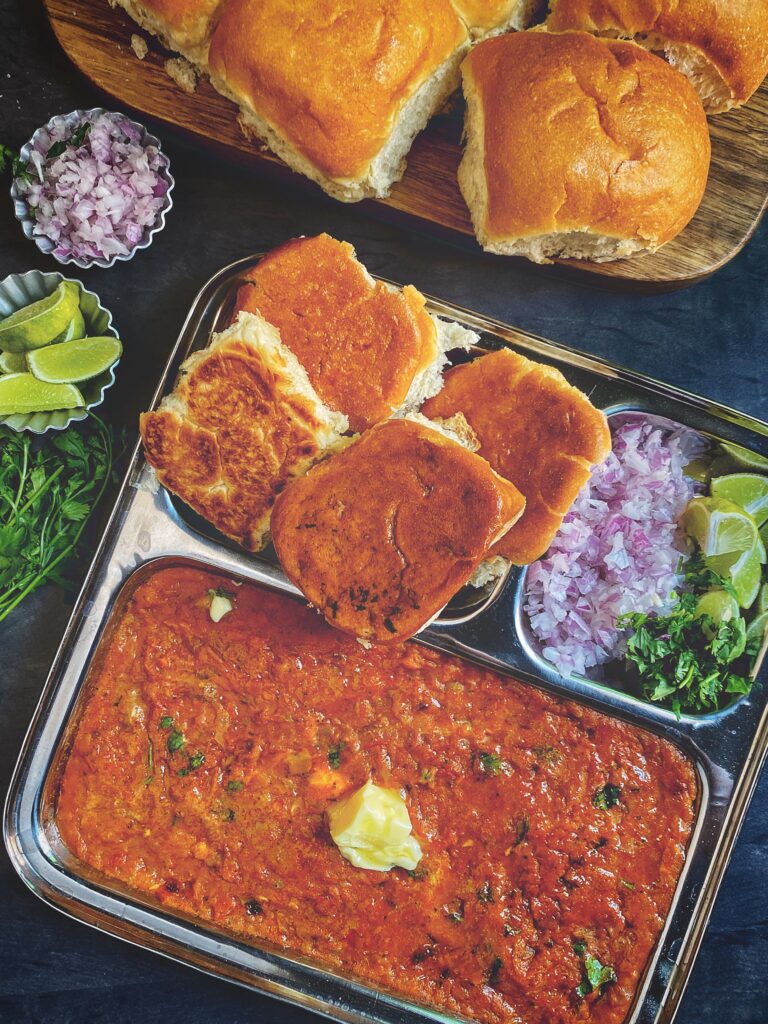
A healthy, high-protein twist on Mumbai street food made with soya granules, onion, tomato, capsicum and aromatic pav bhaji masala, served with lightly toasted pav without excess butter.
Bring water to a boil and add the soya granules. Cook for 5 minutes, then drain and rinse with fresh water. Squeeze out the excess water thoroughly. If using soya chunks, boil them until soft, squeeze out the water and pulse them into small, mince-like pieces.
Step 2: Prepare the masala base
Heat 2 tsp oil in a non-stick pan. Add cumin seeds and allow them to crackle. Add the finely chopped onion and sauté for 3–4 minutes until soft and lightly golden. Add ginger-garlic paste and cook for another minute until its raw smell disappears.
Step 3: Cook the vegetables
Add chopped tomatoes and capsicum. Mix well and cook for 4–5 minutes until the tomatoes soften. Add turmeric, red chilli powder, pav bhaji masala and salt. Mash the tomatoes slightly with the back of a spoon to create a thick, flavourful masala.
Step 4: Add and cook the soya
Add the prepared soya to the masala and mix thoroughly so every piece is coated with the spices. Pour in a little water, cover and cook on low heat for 5–7 minutes. Stir occasionally and adjust the consistency with water if needed. The final mixture should be moist and thick, not watery.
Step 5: Finish the masala
Turn off the heat and add lemon juice and freshly chopped coriander. Taste and adjust the seasoning. For a more street-style texture, lightly mash a portion of the soya mixture into the masala.
Step 6: Toast the pav
Slice the pav horizontally. Heat a tawa and toast the pav cut-side down until lightly crisp and golden. Avoid adding butter; use a few drops of oil only if needed.
Step 7: Assemble and serve
Serve the hot soya masala with toasted pav, chopped onion, coriander and lemon wedges. You can also stuff the masala inside the pav to make a convenient soya masala sandwich.
Approximate Nutrition
For 1 serving (half the masala with 2 small pav):
Calories: 280–330 kcal
Protein: 15–19 g
Carbohydrates: 40–48 g
Fat: 7–10 g
Fibre: 5–8 g
Nutrition values vary depending on pav size, flour composition and the soya product used.
Healthy tip: Use whole-wheat pav, include extra capsicum or peas, and avoid butter to make this a more fibre-rich, protein-packed alternative to regular street-style masala pav.
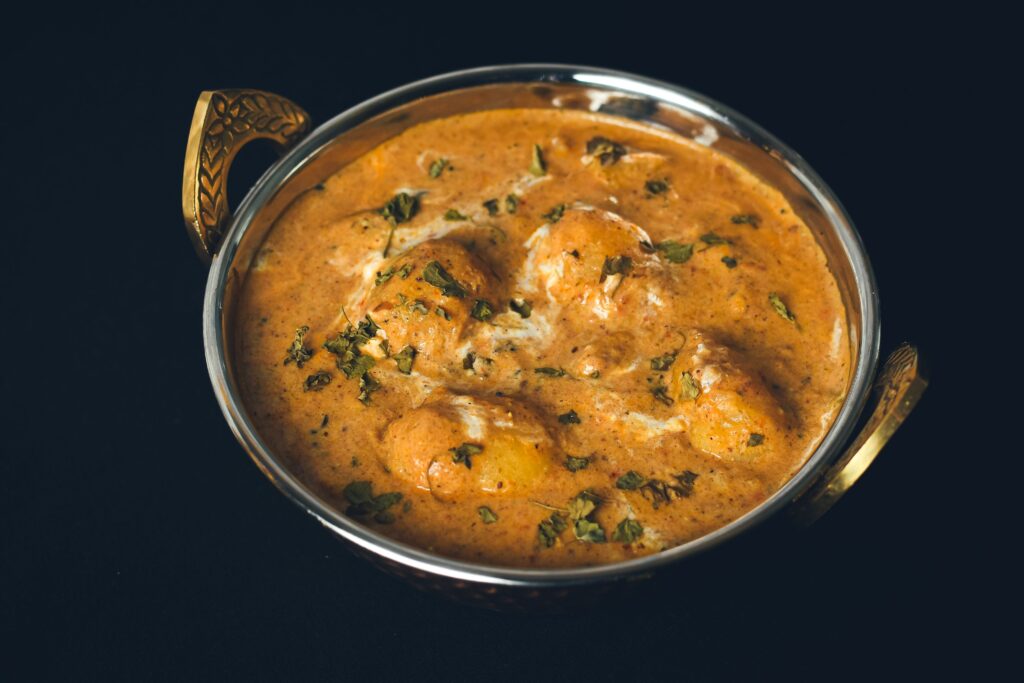
A healthier twist on the classic Malai Kofta, made with a creamy vegetable-based gravy and soft paneer koftas stuffed with crunchy nuts and raisins. Cooked in a paniyaram pan with minimal ghee, this recipe gives you all the richness and flavour with less oil.
Ingredients & Preparation
For the Gravy:
1 carrot, chopped
1 cup pumpkin, chopped
3 tomatoes, chopped
6–7 garlic cloves
3–4 dried red chillies
10–12 cashews
1 cup water
Method:
Add carrot, pumpkin, tomatoes, garlic, dried red chillies, cashews and water to a pressure cooker.
Pressure cook for 3 whistles and allow the pressure to release naturally.
Let the mixture cool completely and blend into a smooth paste. Keep aside.
For the Kofta:
200 g grated paneer
1 boiled potato, mashed
1 tbsp maida
4–5 green chillies, finely chopped
1 tsp grated ginger
Chopped coriander
Salt to taste
Chopped roasted nuts and raisins for stuffing
Method:
In a bowl, combine grated paneer, mashed potato, maida, green chillies, ginger, coriander and salt.
Mash everything well using your palm until you get a smooth, soft dough.
Dry roast the nuts and raisins, then roughly chop them.
Take a small portion of the paneer mixture, flatten it, add the nut and raisin stuffing in the centre and seal it to form small round balls.
Brush a paniyaram pan with a little ghee and cook the koftas on all sides until golden brown and crisp.
For the Curry:
Prepared vegetable gravy paste
1 cup milk
1 cinnamon stick
1 cardamom pod
1 tbsp coriander powder
1 tsp red chilli powder
1 tbsp kasoori methi
Salt to taste
A little ghee for cooking
Method:
Heat a pan and brush with a little ghee. Add cinnamon and cardamom.
Add coriander powder and sauté for a minute.
Pour in the prepared vegetable paste, add salt and red chilli powder. Mix well and cook for a few minutes.
Add milk gradually, mix and simmer until the gravy reaches a creamy consistency.
Crush kasoori methi between your palms and add it to the gravy. Mix well.
Assembly
Pour a layer of creamy gravy into a serving bowl.
Place the prepared koftas over the gravy and pour some more gravy on top.
Finish with a little fresh malai, chopped coriander and an optional ghee and red chilli tadka or chilli oil.
Healthy Cooking Tip: Cook the koftas in a paniyaram pan instead of deep-frying and use a vegetable and cashew-based gravy for a naturally creamy texture without relying on heavy cream.
High Protein | Crispy Walnut Crust | Served with Sautéed Veggies & Healthy Peri Peri Sauce
For the Paneer Crust
10–12 walnuts
1 tsp corn flour
A pinch of salt
For the Marinade
Sriracha or hot garlic sauce, as needed
1 tbsp ketchup
2 tsp ginger-garlic paste
Italian herbs
1 tbsp light soy sauce
2 tsp olive oil
Salt and black pepper, to taste
For the Paneer Steak
Paneer, cut into thick steak-sized pieces
Very little oil, for cooking
For the Sautéed Veggies
2 cups mixed vegetables of your choice
1 tbsp finely chopped garlic
2 tsp olive oil
Italian herbs
Chilli flakes
Salt and black pepper
Parmesan, optional
Healthy Peri Peri Sauce
2 tbsp oats flour
2 cups milk
Salt, to taste
Black pepper, to taste
A pinch of nutmeg
2 tsp red chilli powder
A small dollop of butter, optional
Water, as required
Method
1. Prepare the walnut crust: Pound or grind the walnuts until finely crushed. Add corn flour and a pinch of salt. Mix well and keep aside.
2. Prepare the marinade: In a bowl, mix sriracha or hot garlic sauce, ketchup, ginger-garlic paste, Italian herbs, light soy sauce, olive oil, salt and black pepper.
3. Prepare the paneer steak: Make a few small holes in the paneer using a fork so the marinade can penetrate well. Spread the marinade generously on one side of the paneer and place that side into the walnut mixture. Press firmly so the walnut crust sticks properly.
Flip the paneer, spread the marinade on the other side and coat it with the remaining walnut mixture.
4. Cook the paneer: Heat a griller or non-stick pan and add very little oil. Place the crusted paneer carefully and cook on both sides until the paneer is heated through and the walnut crust turns golden and crisp.
Sautéed Veggies
Heat olive oil in a pan and sauté chopped garlic. Add about 2 cups of your choice of vegetables and cook until tender but still slightly crunchy.
Season with Italian herbs, chilli flakes, salt and black pepper. Switch off the flame and add a little grated Parmesan if you like.
Healthy Peri Peri Sauce
Add oats flour to a pan and cook on low heat for 2–3 minutes.
Lower the heat further and gradually add milk while whisking continuously to prevent lumps.
Keep cooking and stirring until the sauce starts to thicken.
Add salt, black pepper, a pinch of nutmeg and red chilli powder.
Add a small dollop of butter for extra richness, if desired.
Adjust the consistency with a little water according to your preference.
Serve the walnut-crusted paneer steak with sautéed vegetables and a drizzle of the healthy peri peri sauce. 🌿🧀
1. Prepare the dough: Mix whole wheat flour, besan, ajwain and salt. Add water gradually and knead into a firm, smooth dough. Cover and rest for 15–20 minutes.
2. Prepare the filling: Cook the moong dal until soft and drain it very well. Lightly mash it and mix with crumbled paneer, besan, ginger, green chilli, coriander and all the spices. Add lemon juice and mix well. The filling should be firm and not watery.
3. Shape the pithi: Divide the dough into small portions and roll each into a small, thin circle. Place about 1–1½ tsp of the paneer-dal filling in the centre. Fold and seal the edges firmly. Make small half-moon or dumpling-shaped pithis.
4. Prepare the dal: Wash the moong dal and cook with turmeric, salt and water until soft. Keep the dal slightly thin because the pithi will absorb some of the liquid.
5. Make the tadka: Heat 1 tsp oil. Add cumin seeds, ginger, garlic and green chilli. Sauté briefly, then add coriander powder and red chilli powder.
6. Combine: Add the cooked dal to the tadka and bring it to a gentle simmer. Carefully add the prepared pithis.
7. Cook: Cover and cook for 8–10 minutes, or until the pithi is completely cooked. Stir gently to avoid breaking them.
8. Finish: Add fresh coriander and a squeeze of lemon juice. Serve hot.
Quick Tips 💡
Drain the cooked dal really well before making the paneer filling.
Don’t overfill the pithi, as it can open while cooking.
Keep the dal slightly thin before adding the pithi.
For a lighter version, use low-fat paneer.
Avoid vigorous stirring after adding the pithi.
Serve with fresh coriander, lemon and a side of salad.
Advance Prep 🥣
Dough: Prepare up to 8–10 hours ahead and refrigerate in an airtight container.
Filling: Prepare the paneer-dal filling up to 1 day in advance and refrigerate.
Dal: Cook the dal base up to 2 days ahead and refrigerate.
Pithi: Shape the dumplings a few hours ahead, cover and refrigerate.
Cook the pithi fresh in the dal for the best texture.
Protein Boost 💪
The combination of moong dal + paneer + besan + whole wheat flour makes this version substantially more protein-rich than traditional flour-based pithi. For an additional protein boost, serve it with 150 g thick Greek yogurt/curd on the side.
please use the attached video/post as a reference for the preparation and presentation.
The final recipe should include the paneer + moong dal filling inside the pithi, while keeping the overall recipe healthy and traditional-style.
Traditional Chhattisgarhi | Steamed | Protein-Rich | Healthy Snack
Ingredients
1 cup chana dal, soaked for 3–4 hours
½ cup finely chopped onion
½ cup finely chopped coriander
1–2 green chillies, finely chopped
1 tsp grated ginger
½ tsp cumin seeds
½ tsp ajwain
½ tsp turmeric powder
½ tsp red chilli powder
½ tsp coriander powder
½ tsp garam masala
Salt to taste
1 tbsp lemon juice
1–2 tbsp water, if required
Oil, for greasing
Method
Soak the dal: Wash and soak chana dal for 3–4 hours. Drain completely.
Grind: Add the soaked dal to a mixer and grind into a slightly coarse, thick paste. Avoid making it completely smooth.
Prepare the mixture: Transfer to a bowl and add onion, coriander, green chilli, ginger, cumin, ajwain, turmeric, red chilli powder, coriander powder, garam masala and salt.
Add lemon juice and mix everything well. The mixture should be thick enough to hold its shape. Add only a little water if needed.
Steam: Grease a steamer plate lightly with oil. Take small portions of the mixture and shape them into small round or slightly flattened baforis.
Place them in the steamer, leaving some space between each piece. Cover and steam for 15–20 minutes, or until firm and cooked through.
Allow them to cool for a few minutes. Serve hot with green chutney, coriander chutney or tomato chutney.
Quick Tips 💡
Keep the dal mixture coarse for the best traditional texture.
Drain the soaked dal very well before grinding; excess water can make the bafori soft.
Don’t overcrowd the steamer.
For extra flavour, add a little finely chopped fresh coriander and garlic.
You can lightly pan-sear the steamed bafori after cooking for a slightly crisp exterior.
Advance Prep 🥣
Soak the chana dal overnight and refrigerate after draining if you’re preparing it later.
The dal can be ground and stored in the refrigerator for up to 24 hours.
Chop the vegetables and herbs in advance and refrigerate separately.
Steamed bafori can be prepared ahead and refrigerated. Re-steam or lightly pan-heat before serving.
Serving idea: Pair 3–4 baforis with green chutney and a fresh onion-coriander salad for a filling, protein-rich snack. 🌿
Add besan, whole wheat flour, finely chopped palak, hung curd, oil, salt and all the spices to a mixing bowl. Mix well, rubbing the mixture together with your hands.
Let the mixture rest for 10–15 minutes. The palak will release moisture and naturally hydrate the dough.
After resting, add whole wheat flour little by little and knead into a firm, workable dough. Avoid adding too much flour at once.
Divide the dough into small portions and roll each portion as thin as possible. Use a little dry flour or oil to prevent sticking.
Cook on a hot tawa until crisp and golden. For a papri-style version, cut into small pieces and air-fry until completely crisp.
Whisk the hung curd with cumin powder, chaat masala, black salt and optional sweetener until smooth.
Arrange the crispy palak papris on a plate and generously top with 150 g hung curd.
Drizzle with mint and coriander chutney, add plenty of pomegranate seeds and finish with chaat masala. Serve immediately for the best crunch. 😍
Quick Tips 💡
Roll the papris thin for maximum crispiness.
Don’t add too much flour initially—the palak releases water while resting.
For a lighter version, air-fry instead of shallow-frying.
Use thick hung curd so the chaat doesn’t become watery.
Add chutneys just before serving to keep the papris crisp.
For extra protein, you can increase the quantity of hung curd.
Advance Prep 🥣
1–2 days ahead:
Prepare and refrigerate the palak dough in an airtight container.
Make mint and coriander chutneys and refrigerate.
Hang the curd and store it in the refrigerator.
On the day:
Roll and cook/air-fry the papris in advance.
Let them cool completely and store in an airtight container to maintain crispness.
Whisk the curd just before assembling.
Keep pomegranate seeds washed and ready in the refrigerator.
Best assembly tip: Keep the papri, curd, chutneys and toppings separate until you’re ready to eat. Assemble fresh for a crispy, chatpata chaat! 🌿✨
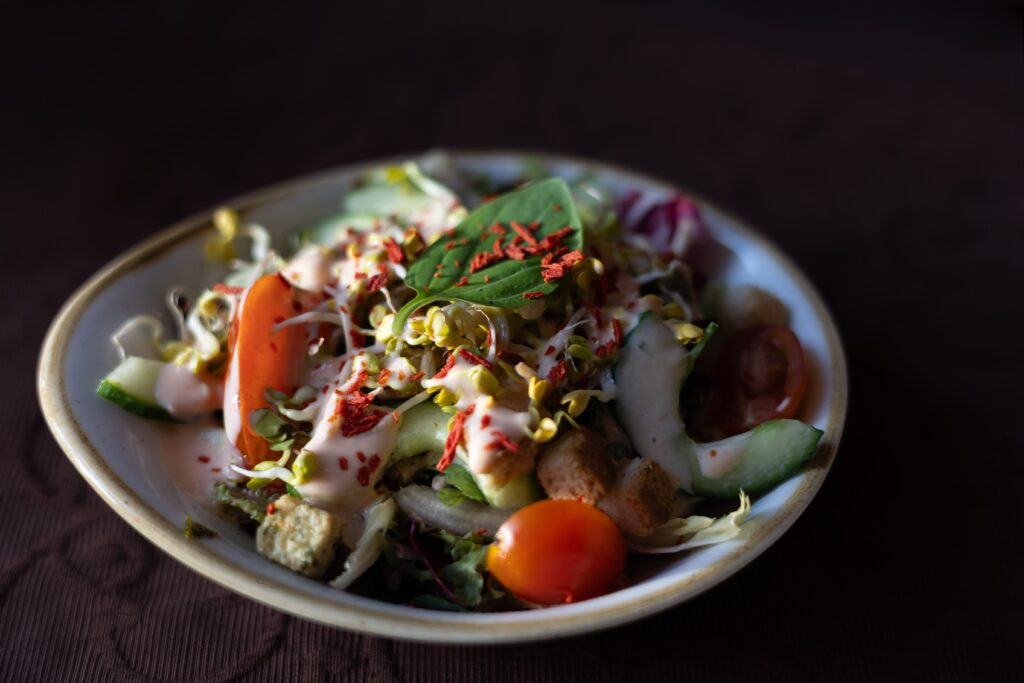
A refreshing, crunchy, and protein-rich salad tossed in a zesty homemade mint dressing. Perfect for a healthy breakfast, light lunch, or evening snack.
🥗 Ingredients
For the Salad:
1 cup mixed sprouts (moong or kala chana)
¼ cup chopped cucumber
¼ cup chopped tomato
2 tbsp chopped onion
1 tbsp grated carrot
1 tbsp pomegranate seeds (optional)
Salt and black pepper to taste
1 tsp lemon juice
For the Mint Dressing:
½ cup fresh mint leaves
2 tbsp coriander leaves
2 tbsp thick yogurt
1 small green chilli
1 small garlic clove
1 tsp lemon juice
1–2 tbsp water, as needed
Salt to taste
👩🍳 Method
Prepare the sprouts: Steam or lightly boil the sprouts until tender. Allow them to cool before adding them to the salad.
Make the mint dressing: Blend mint, coriander, yogurt, green chilli, garlic, lemon juice, salt, and a little water until smooth and creamy.
Assemble the salad: In a bowl, combine sprouts, cucumber, tomato, onion, and grated carrot.
Add the dressing: Pour the mint dressing over the salad. Add black pepper and lemon juice, then toss gently.
Garnish with pomegranate seeds and serve fresh.
💡 Healthy Tips & Advance Preparation
Lightly steaming sprouts can make them easier to digest and is safer than eating raw sprouts.
Add roasted peanuts or pumpkin seeds for extra crunch and nutrients.
Prepare the mint-yogurt dressing up to 2 days in advance and store it in an airtight container in the refrigerator.
Keep chopped vegetables and cooked sprouts separately refrigerated, and mix everything just before serving for the best freshness and texture.
Healthy Twist: Use thick Greek yogurt in the mint dressing for a creamier texture and an additional protein boost.