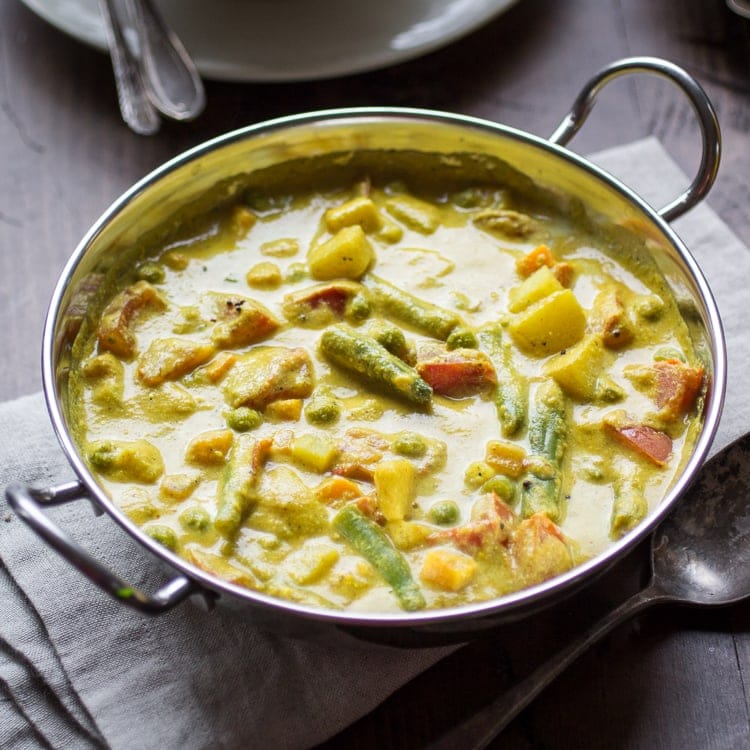
Vegetable korma is a one-pot, super aromatic, delicious, and easy vegan recipe. It is made of vegetables, spices, coconut, poppy seeds, cashews, and herbs. This delicious recipe is an important part of every south Indian meal. It is usually eaten with dosa, paratha, pulao, and many other breakfasts.
Firstly, we will prepare korma paste. For this take a grinder put coconut, fennel seeds, cashew nuts, roasted gram, and six tsp water in it, and make a fine paste.
Then, we will prepare gravy for the korma. For this, heat oil in a pot, put bay leaf, green cardamom, cumin seeds, cloves, cinnamon, and star anise, and stir for a minute. Now, add onions, and green chilies, and sauté until turns light brown.
After that add ginger garlic paste and turmeric and sauté for 1 – 2 minutes.
Then add tomato, salt, red chili powder, garam masala, and coriander leaves and cook well until tomato becomes mushy and oil starts to separate.
Then, add coconut cashew paste and cook for 2-3 minutes.
After that, put the flame low and add potato, beans, carrots, peas, and cauliflower in it. Mix well and sauté for 2-3 minutes.
Now, add 1.5cup water, and salt (according to taste), stir well and cook until the veggies become tender.
Finally, add coriander leaves and switch off the flame and then serve.
Cheera Thoran, commonly known as spinach bhaji is a popular dish from Kerala. It is made up of red or green spinach. So, it is a very healthy dish. Cheera Thoran can be eaten with chapatti, paratha, or rice. This dish is loaded with protein, vitamins, and minerals. This is a very easy and quick dish because it is made up of very less ingredients and is also an easier process. You can also prepare it for lunch or dinner and carry it in your lunch box.
Pav bhaji is a super delicious and highly nutritious recipe if cooked in a different style. Bhaji is made up of various types of vegetables which makes it a fiber-rich recipe. We can add vegetables according to our choice also. We can eat this bhaji with chapatti or paratha or bread. It tastes best with all. Here, we give a superhealthy recipe for making pav bhaji that you will not regret making pav bhaji if made by this method. You should try this recipe at least once. I am sure that you are going to make it again and again.
Also, with this recipe, you can feed your children healthy vegetables that most kids don’t like to eat. You can also keep it in their lunch boxes. They are going to love it.
Firstly, take a pressure cooker and put cauliflower, cabbage, bottle gourd, beetroot, carrot, beans, ginger, garlic, and green chilies and pressure cook them to 2 whistles.
After that, when pressure is released, transfer the veggies into a bowl and let it cool down.
Then, mash them with the help of a masher.
Now, heat oil and some butter in a pan, put cumin, chopped onions, and capsicum, and fry them until golden brown.
Then, add turmeric powder, chopped tomatoes, salt, coriander powder, and red chili powder and fry them well.
After that put your prepared veggies mixture in it and cook for 10 minutes.
Then, add garam masala, pav bhaji masala, and some butter, cook for 5 minutes and close the flame.
Garnish it with coriander leaves and serve it with whole wheat pav or multigrain pav instead of refined flour pav for more health benefits.
Pav-bhaji is a very famous street food that is everyone’s favorite. But when we are on the keto diet we think that we can’t have Pav-Bhaji because of its high carbohydrate content. So, here we are giving you the recipe for keto-friendly Pav Bhaji which is very much tasty and will not let your diet get disturbed. We will prepare it in such a way that you don’t have to compromise on its taste and also you will get health benefits from it. You have to strictly follow the ingredients and quantity which are mentioned in the recipe to avoid additional carbohydrate intake.
Ingredients for Keto Pav-Bhaji :
Tomato puree – 200 gm
Onion chopped – 1 big (200 gm)
Capsicum chopped – 100 gm
Cauliflower grated – 100 gm
Garlic paste – 2 tbsp
Ginger paste – 1 tbsp
Amul butter – 30 gm
Sunflower oil – 1.5 tbsp
Red chili paste –as per taste
Garam masala – 1 tsp
Pav Bhaji masala – 2 tsp
Grated cheese – 150 gm
Salt – as per taste
Method:
Firstly, heat oil in a pan and add ginger paste and garlic paste. Stir them until they are roasted well.
Then we will add red chili paste and 20gm butter and mix them well.
After that add onion, and capsicum and let them cook well.
Then we will add cauliflower, which is a substitute for potato, and give the same consistency and taste as the potato.
Now, add 10 gm butter and some water, close the lid and let them cook well.
Then, we will add tomato puree, pav bhaji masala, garam masala, and salt and let them cook properly.
After that, we will add cheese for increasing the protein content of pav bhaji.
Now, add water to adjust the consistency you want and cook it properly.
Finally, your keto-friendly pav bhaji is ready. Garnish it with coriander leaves and serve it with almond flour pav.
Veg rava cheela is a very good option for breakfast. It is full of fibers and easily digestible. Veg rava cheela is made up of rava (semolina) and various types of vegetables which makes it very healthy and delicious. Cheelas is one of the most favorite breakfasts for people. There are various types of cheelas are made using different types of ingredients because they are rich in protein, vitamins, minerals, and dietary fibers. So, helps in weight loss, diabetes, cardiovascular diseases, and soo many types of diseases. They are very easy to cook and save us time also. You can add your favorite veggies to it also.
Firstly, take a large bowl, put rava and half cup curd, ½ tsp salt, and ¾ cup water, and whisk well so that no lumps are formed.
Then, keep the batter at rest for about 20 minutes till the rava swells completely.
After that, add onion, capsicum, carrot, green chili, ginger paste, and coriander in it and mix well. Add water if required and give it a thick flowing consistency.
Then, grease a nonstick pan and spread your batter evenly on it making a thick layer.
Now, pour oil around the edges and cook cheela for 2 minutes.
After that, flip the cheela and cook from another side for about 2 minutes.
Finally, when cheela gets cooked properly, serve it with green chutney or your favorite chutney.
Carrot Hummus is a Lebanese dip. It has a unique flavor of chickpeas, olive oil, and parsley. Hummus is excellent for health. We can have hummus with cucumber, carrots, and pita bread. You can use it as a spread on bread. It is very rich in protein and boosts your metabolism. By this, it helps you weight loss process. Hummus is also rich in omega-3-fatty acids which help to reduce inflammation in the body.
Lapsi is a popular food option for breakfast in Uttar Pradesh. It is made up of wheat flour. We can also call it salted wheat halwa. Traditionally, lapsi is made with only wheat flour without vegetables but, we will make some changes in its traditional recipe to make it healthier. It will make it more nutritious and enhance its taste and flavor.
Ingredients for traditional U.P. special Lapsi:
Whole Wheat flour – 200 gm
Mustard oil – 1 tbsp
Ajwain – ½ tsp
Salt – as per taste
Red chili flakes – ¼ tsp
Water – 1 Cup
Chopped coriander leaves – 1-2 tbsp
Traditional Method:
Firstly, take a pan, put mustard oil, and roast wheat flour on medium flame until it turns golden brown.
Then, put ajwain and salt in it and mix well.
After that, slowly sprinkle water with the help of your hands in it and continue roasting it. Don’t make it too mushy or too dry.
Garnish it with coriander leaves and serve.
As we see, the traditional lapsi contain wheat flour only and to make lapsi healthier we will add some more ingredients to its recipe.
Ingredients for healthier lapsi:
Onion chopped – 1
Capsicum chopped – 1
Carrot chopped – 1
Green peas – ½ cup
Multigrain flour – 200 gm
Mustard oil – 1 tbsp
Ajwain – ½ tsp
Salt – as per taste
Red chili flakes – ¼ tsp
Water – 1 Cup
Chopped coriander leaves – 1-2 tbsp
Method:
Firstly, heat oil in a pan, add onion, capsicum, carrot, and peas, and sauté them.
Then, please take out your veggies from the pan and put them aside.
After that, again heat some oil and roast multigrain flour in it.
Then, add salt and ajwain and mix well.
Now, sprinkle water on it and give it a medium-dry consistency.
Add all your veggies, and chili flakes and mix well.
Finally, garnish it with coriander leaves and serve.
Proteinaceous Egg salad is a very high-protein breakfast option for everyone. Eggs are a complete source of protein. They can be considering Superfoods because they contain 13 essential vitamins and minerals. You can eat this protein-rich salad for breakfast, lunch, or dinner. This is a very low-carb recipe.
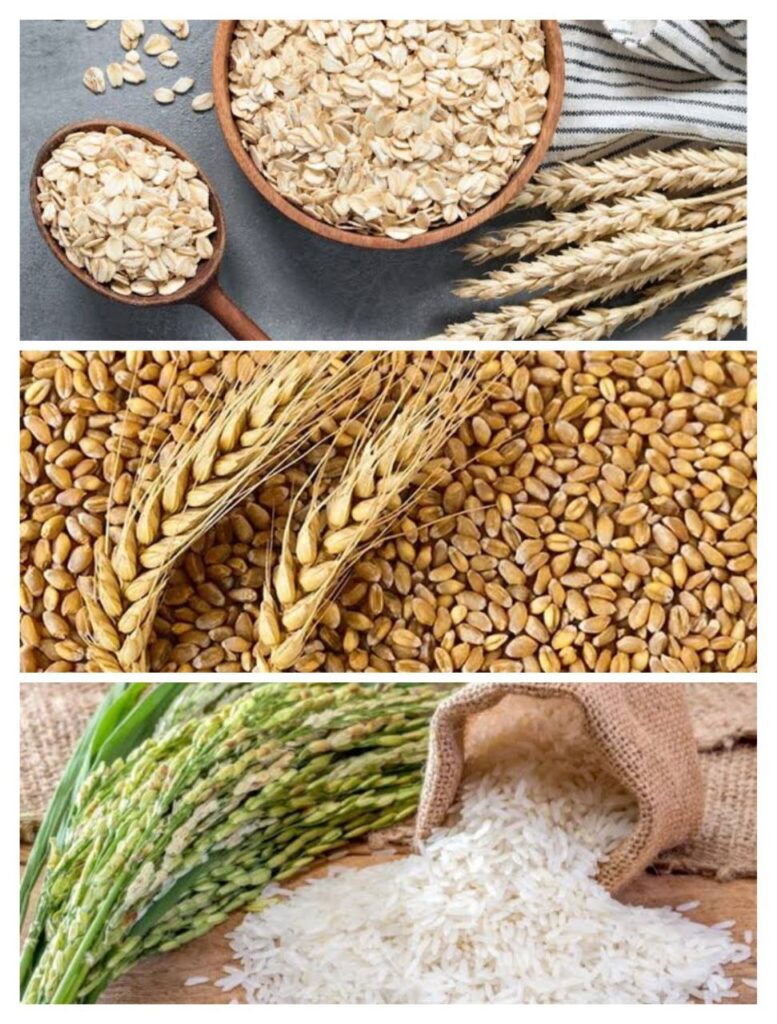
The Impacts of oats on health are enormous. Oats are a type of cereal grain belonging to the “Poaceae” grass family of plants. Its scientific name is “Avena sativa”. Oats are popular because of their high nutritional value. The grains came from edible seeds of oat grass which we eat. When we cook oats they give us a mushy texture.
Oats have enormous health benefits. They have soluble fiber, vitamins, minerals, and antioxidants in rich amounts. They can help lower cholesterol and blood sugar level.
Oats are high in a fiber called beta-glucan which boosts your immunity and keeps your heart healthy. Being rich in fiber, oat keeps you full for a longer time. They also contain an antioxidant “avenanthramides”. Various studies have proven that it helps in reducing inflammation and regulating blood pressure also.
The Impacts of oats on health also depend on the type of oats:
There are many varieties of oats available in the market. They all have different nutritional values which depend upon their processing. The more processed the oats, the more the glycemic index of it. So, here are the types of oats available in the market:
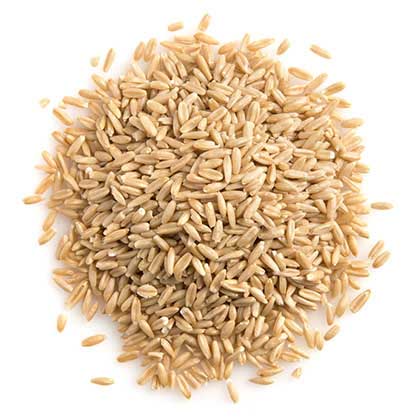
Oat groats
Oat grains without processing are “groats”. They retain the germ, bran, and endosperm even after removing their hull or husk by the process called “hulling”. The husk which comes out after hulling is “chaff”. Oat groats have the same nutritional value as grains. They give us a hearty and chewy texture after cooking.
There are 3 main parts of grains:
Bran- it is the outermost part of the grain and has the highest nutritional value because of the higher dietary fiber value. Oat bran can be eaten as a hot cereal, mixed into smoothies, can be sprinkled on top of bread and other baked goods. It can help in relieving constipation and improve gut health.
Germ- it is the core of the grain and vitamins and minerals are stored here.
Endosperm – it is the starchy kernel of the grain which is used for milling.
Taste and texture:
Oat groats are gluten-free so they can be eaten by people with celiac disease or gluten intolerance.
They have a hard and chewy texture.
Groats should be first steamed or soaked before cooking.
They have a nutty flavor and absorb the flavor of the dish.
You can also toast or roast the groats before adding them to a dish for a better taste.
Also, we can use it to make pilaffs, stews, or hot cereals.
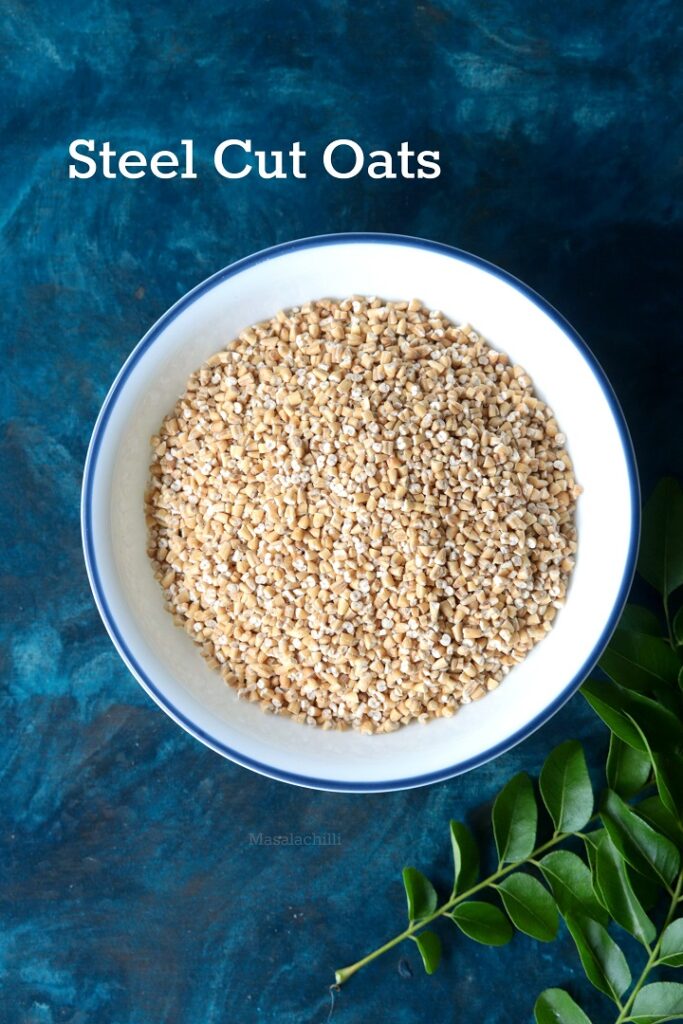
Steel-cut oats
They are also called Irish oats. When oat groats are cut into two or three smaller pieces by using a steel blade they are known as steel-cut oats. The larger the size of oats, the longer time it will take to cook. They are the least processed of all oats varieties and cook faster than oat groats but slower than rolled oats.
Taste and texture:
Steel-cut oats are creamy and delicious.
You can roast them before making any recipe for a better taste.
They have good texture and flavor.
We can use steel-cut oats for making oatcakes, smoothies, or other culinary purposes.
Scottish oats
Scottish oats
They ground with the help of stone, almost to a powder. This is a very old and traditional process. Scottish oats are also known as “scotch oats”. This type of oats get cooks a little faster than steel-cut oats and has a creamy consistency. Also, oatmeal historians consider them the “original oatmeal”.
Taste and texture:
They are coarser than oat flour.
It has a thick and creamy consistency which we know as porridge.
They have a slight texture and give a fantastic taste when combined in baking recipes.
Also, take very less time in cooking.
Rolled oats
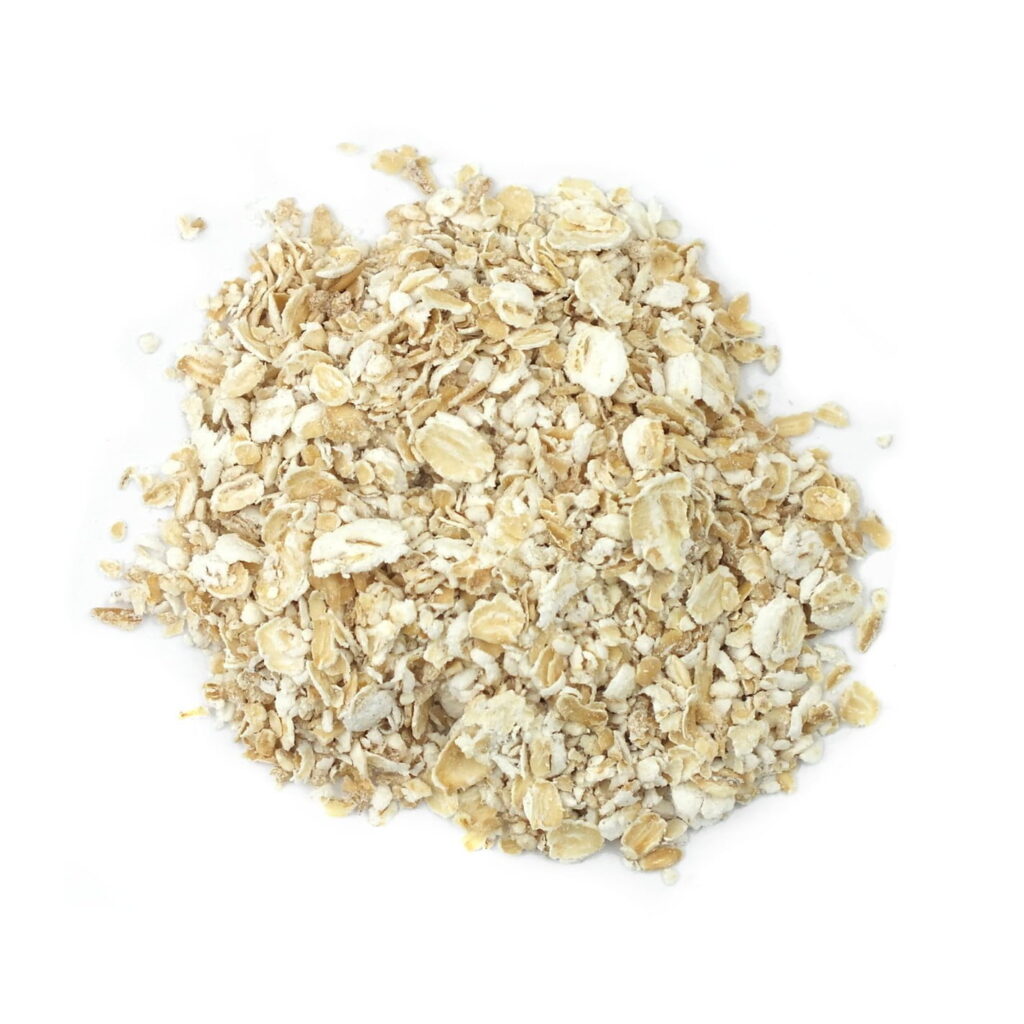
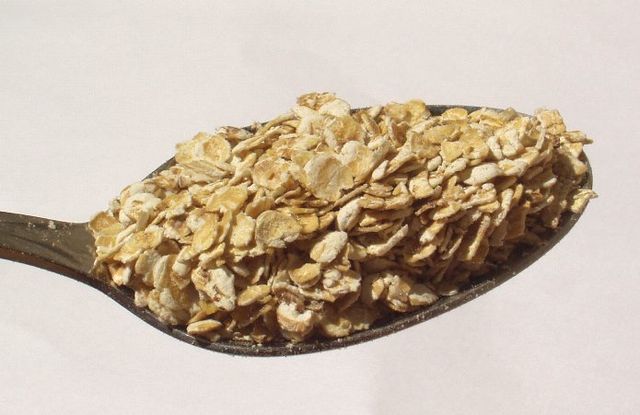
Rolled oats are made by steaming, rolling, and then flattening oat groats into flakes and then drying them. They have a chewy texture, and mild flavor, and give a creamy consistency when cooked. This process stabilizes the healthy oils in oats, so they stay fresh for a longer time and also cook faster.
We divide rolled oats into three types-
Old-fashioned oats: The whole grains first get steam, flatten by the roller and then flake to create old-fashion oats. We use these oats in oatmeal, baked goods, and also for coating meats. It has the most texture of all three types of rolled oats.
Quick-cooking oats: The oats are cook, dry, and cut, then roll thin more than old-fashioned oats to make quick-cooking oats. They cook faster.
Instant oats: The oats are cook and dried before cutting and then rolled thin to make instant oats. They are the fastest-cooking oats of all types. They sometimes give gummy or mushy consistency. Instant oats are less healthy than other types of rolled oats.
Oat flour
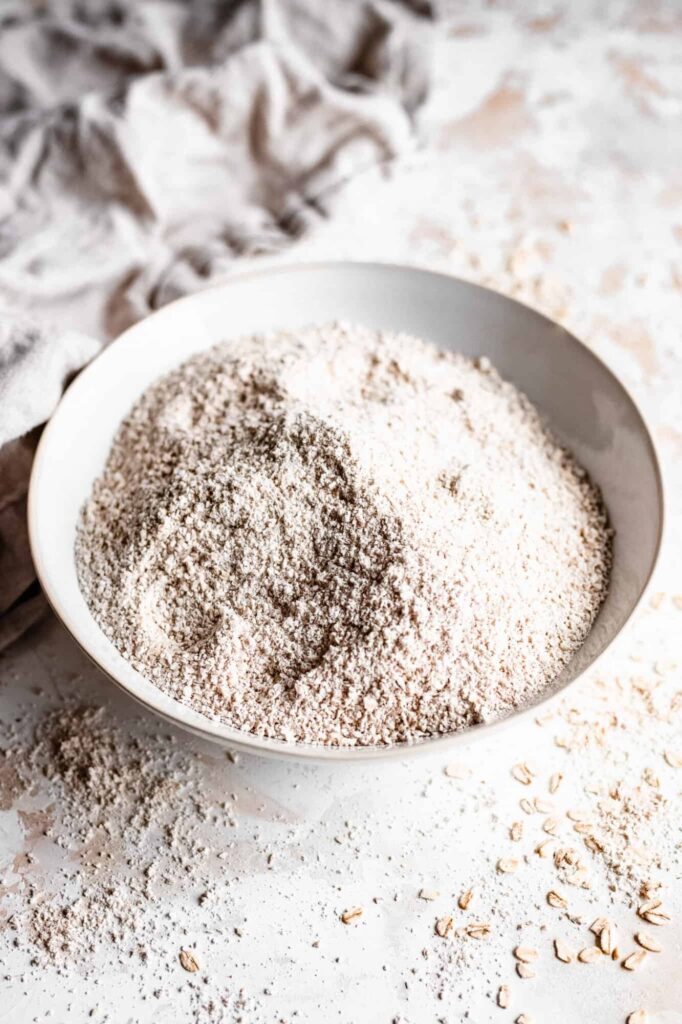
Oat flour is the flour of oat groats which is finely grind. You can also make oat flour at home by blending or food-processing oats into fine powder. Oat flour could be use as a replacement for wheat flour. It is gluten-free.
Culinary practices:
There are so many varieties of recipes for oats. Any recipe for oats consider the type of oats. We can make overnight oats by soaking oats overnight which gives digestive and gastronomic benefits to the body. Oatmeal is made by crushing oats, which makes it easier to prepare, and cooking time is also reduced.
Whereas, rice is one of the most popular cereal grains in the world. You can not consume rice raw because it may have bacteria, dirt, or other harmful substances. Soup, dessert, and pudding are the products of rice. Rice doesn’t take a long time to cook.
Wheat processing occurs to make multiple wheat products like flour, semolina, and bran. Their processing is done to make the dough, bread, pasta, or any breakfast component. Beer and whisky are also products of wheat.
Price comparison:
Wheat and rice are cheaper than oats. However, the price may vary in different parts of the world and also on the type of processing done on oats, rice, and wheat. The Impacts of oats on health are soo many that their price does not matter.
Shelf life:
They all have a longer shelf life if stored properly. We should store it in a dry place.
Nutritional comparison of oats, rice, and wheat:
Diet and weight loss-
Oats can promote a healthy and well-balanced diet. The Impacts of oats on health are soo many. Taking oats in breakfast can boost your energy. Overnight oats with fruit and nut is a wonderful option for breakfast.
Rice can help in weight loss if taken in moderation. It makes the person feel full faster, so calorie consumption is less. Rice is a major cereal in India and is widely get consume in Asian cuisine.
Wheat contains a major protein called “gluten” which makes it adhesive and sticky when combined with water. It helps in pasta and bread making. So, people with celiac disease or gluten sensitivity or on a gluten-free diet cannot consume wheat. They can take it out as a replacement for wheat.
2. Keto diet:
Oats, rice, and wheat all are high in carbs. Therefore, we should not consume them on the keto diet. However, some foods have less of their quantity . We can eat them Consider the content of them before eating.
The Impacts of oats on health:
The Impacts of oats on health are the following:
Role in digestion – oats reduce the risk of diverticulitis and lipid absorption which shows a positive effect on overall metabolism oats also make intestinal microflora great by improving its performance. Wheat also reduces the risk of diverticulitis if eaten with husk and bran.
For diabetic patients – wheat and oats consumption reduces the risk of type 2 diabetes. Also, they keep blood glucose and triglyceride level in control. Rice is not as good as wheat and oats for diabetic patients because it has a high glycaemic index. So, we can eat it moderately.
Heart health – oats lower serum cholesterol and blood sugar level which lowers the risk of hypertension and cardiovascular diseases. Eating rice in moderation is not harmful to heart health.
Cancer – beta-glucans found in oats show anti-carcinogenic properties against lung cancer cells. Whereas, wheat also reduces the risk of developing colon cancer.
Celiac disease – celiac disease is sensitivity to a protein called “gluten” in people. Oats and rice do not contain gluten which is present in wheat. So, they can easily consume by people who have celiac disease, gluten sensitivity or are on a gluten-free diet. People with celiac disease should not consume wheat.
Nutrient comparison in oats, wheat, and rice
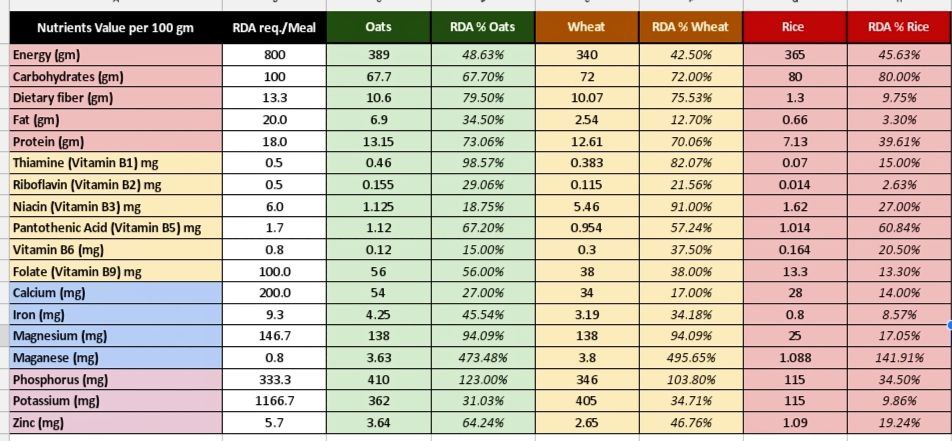
Carbohydrates present in oats is 67.7 gm, in wheat is 72 gm and in rice is 80 gm which shows oats give fewer carbohydrates in comparison to wheat and rice despite giving maximum energy. Oats have 10.7 gm of dietary fiber, wheat has 10.06 gm and rice has 1.3 gm. In dietary fiber also oats have the maximum quantity. It can help in weight loss. Oats are very rich in protein. They have 13.15 gm of protein whereas, wheat has 12.6gm, and, rice has 7.13gm. So, by these points, we come to know that oats are better than rice and wheat in terms of carbohydrates, protein, and fiber.
Then, we see oats have thiamine 0.46mg of, wheat has 0.383mg of, and rice has 0.7mg which is also a good quantity. Riboflavin in oats is 0.155 mg, wheat has 0.115mg and rice has 0.014mg. Oats have the most riboflavin in comparison to wheat and rice and, riboflavin is very important for body growth. Niacin is 1.125 mg in oats, 5.46 mg in wheat, and 1.62 mg in rice. So, niacin is higher in wheat. Niacin is important to keep our nervous system, digestive system, and skin healthy. Pantothenic acid and folate quantity are also higher in oats and which makes oats better in terms of vitamin content than wheat and rice.
Now, we see calcium is 54 mg in oats, 34 mg in wheat, and 28 mg in rice. So, oats have the highest calcium quantity than wheat and rice. Calcium is very important for bones. Iron is high in oats in comparison to oats. The quantity of iron in oats, wheat, and rice is 9.3mg, 3.19mg, and 0.8 mg respectively. Magnesium is present in equal amounts in oats and wheat but less in rice. Manganese is higher in wheat which is 3.8 mg in wheat, 3.63 mg in oats, and 1.088 mg in rice. So, oats have almost the same quantity of manganese as wheat. By comparing these terms also we get to know that oats are better in comparison to rice and wheat.
Phosphorus in oats is 333.3 mg, 346 mg in wheat, and 115 mg in rice. So, wheat is better in phosphorus quantity. Then, we see potassium is 362 mg in oats, 405mg in wheat, and 115 mg in rice. So, wheat is also higher in the potassium range. After that, we see zinc is 3.64 mg in oats, 2.65 in wheat, and 1.09 mg in rice. So, the quantity of zinc is higher in oats. Zinc is very important for boosting your immunity and metabolic function in the body.
If you are facing issues in dropping your weight, please take this free-body type assessment: Click here
Diabetes is not a single disease; it’s a group of many diseases. All the diseases are lump together and cause diabetes mellitus. It is a metabolic de-arrangement in our body. This is a group of metabolic diseases that are put together due to some common disease. That common disease is a tendency for chronic hyperglycemia and reduced insulin production. In hyperglycemia either there is increase resistance to the action of insulin or there is reduce the production of insulin.
How does diabetes occur?
We can understand by there are pancreas and beta cells that produce insulin that is going through the blood to the cells and act on its receptors. But, when production reduces or action reduces or both things occur like reduced production or increased resistance which makes diabetes a very big problem.
In this group of diseases there are many different types of diabetes which are as follows:
Type 1 diabetes:
This is a classical example of diabetes mellitus. In this, there is a severe reduction in the production of insulin, or sometimes absolutely absent because beta cells that produce insulin are attacked by the immune system or we can say that beta cells are destroyed due to an autoimmune reaction.
Type 2 diabetes:
Type 2 diabetes is a major problem. In this resistance to the action of insulin at least in the initial stages because the beta cells of the pancreas might be producing insulin at a normal level or more than normal but cells are not responding to insulin.
Gestational diabetes:
Gestational diabetes
This is a condition in which during pregnancy there is a tendency for hyperglycemia or there is hyperglycemia. In this condition, there is a problem in the production of insulin as well as there is peripheral resistance that tissues are not responding well to the insulin.
LADA (latent autoimmune diabetes of adults):
LADA stands for “latent autoimmune diabetes of adults”. In this condition, the immune system attacks beta cells in the pancreas at a slower rate compared to type 1 and type 2 diabetes.
It develops most commonly in people over 30 years old. because of which it is misdiagnosed. Because some healthcare experts still think that type 1 diabetes occurs only during childhood.
Medication and lifestyle changes can help in treating LADA for some years. But after some time as insulin production declines, insulin becomes as compulsory as your daily health management for type 1 diabetes.
Signs and symptoms of LADA:
They include symptoms of both type 1 and type 2 diabetes. Some of the primary symptoms are:
Difficulty in concentration (brain fog)
Itchy skin, dryness
Constant feelings of tiredness and lethargy
Feeling hungry all time
As the problem raises more, the more symptoms you will develop:
Feeling thirsty constantly
Frequent urination
Vision changes
Tingling in hands, feet, and legs
Tired or exhausted all time
Lose weight unexpectedly
Yeast infection (in women)
Factors to diagnose LADA:
The age is over 30 years of patients.
At least one out of four types of tests is positive for diabetes-related autoantibodies.
There is no requirement for insulin for at least six months after their initial diagnosis.
Another autoimmune diseases including Grave’s disease, celiac, or Hashimoto’s disease can be present.
Types of tests to diagnose LADA:
(GAD) Glutamic acid decarboxylase
(ICAs) Islet cell antibodies
Some other tests also can help in the diagnosis of LADA:
(HbA1c) Haemoglobin A1c test
(FPB) Fasting plasma glucose test
(OGTT) oral glucose tolerance test
Ketone test
Treatment of LADA:
Daily insulin therapy
Blood sugar monitoring
Food choice
Maturity onset diabetes of young people (MODY):
In this type of diabetes, there are symptoms of type 2 diabetes but it occurs at a younger age. In MODY, the body’s ability to produce insulin is limited but different than type 1 diabetes. When there is a decrease in insulin production, blood glucose level raises which causes diabetes.
Signs and symptoms:
MODY symptoms develop slowly, so it is possible to have no symptoms at first. That is why MODY is often left undiagnosed for a long time. Symptoms are:
Skin infection
Yeast infection
Urinating frequently
Thirsty frequently
Blurred vision
Causes of MODY:
MODY is caused by a single gene mutation which is why it is a “monogenic” disease. A different gene mutation can cause MODY. If someone has a family member with MODY, then they have an increased risk for the condition.
Diagnosis of MODY:
Different types of tests can help in the diagnosis of MODY:
Blood sugar test- this is the first step for diagnosing MODY. If these test results are positive then a doctor can advise you further test to assess the type of diabetes you have.
Genetic test- MODY occurs due to genetic mutation; a genetic test can help in the diagnosis of MODY.
Treatment of MODY:
Treatment is done with oral medications or insulin injections. Some forms don’t need any treatment. The treatment varies depending on what genetic mutation caused the condition.
Complications of diabetes mellitus:
Diabetes causes a lot of disturbances in a person’s body. It not only causes disturbance in carbohydrate metabolism but also lipid metabolism and protein metabolism. Complications of diabetes are divided into two categories:
Long-term complications-
Also, diabetes can produce vascular problems which we consider a disease also because it has various complications in it.
Diabetes damages the vessels (the vascular disease) and angiopathy are into two types:
Big vessel diseases (macrovascular complication) or macro angiopathy
Small vessel diseases (microvascular complications) or microangiopathy
Macrovascular complications:
They occur from changes in the medium to large blood vessels. The blood vessel walls get thick, sclerosis, and become occluded by plaque that adheres to the vessel walls. So, the blood flows is block.
The macrovascular complication occurs due to damage to larger blood vessels. These complications can occur in the blood vessels of any body part. They include diseases of coronary arteries, peripheral arteries, and cerebrovasculature. The early stage is associated with an atherosclerotic plaque in the vasculature supplying blood to the heart, brain, limbs, and other organs. The late step involves complete obstruction of these vessels which can cause myocardial infarction (MI), stroke, claudication, and gangrene.
Peripheral arterial disease
It is present in approx 29% patients of with diabetes and may remain undiagnosed due to lack of sensation because of neuropathy to identify pain.
Symptoms- claudication, ulcers, limb amputation
Screening and prevention – as part of a thorough history, patients ask about foot ulceration as well as limb claudication. Screening of all patients with diabetes over the age of 50 years is recommended with Ankle Brachial Index (ABI).
Coronary Heart Disease
Patients with type 2 diabetes are at an equal risk of getting myocardial infarction as well as patients with Coronary Heart Disease. Almost 75% of patients with diabetes are most probably having obstructive or non-obstructive coronary artery disease also.
Screening and prevention – However, the patient should be screened every year for being overweight or obese, hypertension, dyslipidemia, tobacco use, chronic kidney disease, albuminuria, and a family history of coronary heart disease. If any of them are present, they should be managed appropriately.
Hypertension
An ideal range for blood pressure is 120/80 mmHg. Treatment for hypertension with a goal blood pressure of <140/90 mmHg for those with lower cardiovascular risks, and<130/80 mmHg for those with higher cardiovascular risks should be initiated. The beginning of treatment should be with angiotensin-converting enzyme (ACE) inhibitors or angiotensin receptor blockers (ARB) if albuminuria is present.
Lipid management
Patients over the age of 40 should start taking a statin, in addition to lifestyle modification. Also, the general recommendation is to use moderate-intensity statin for patients without CVD. For patients with multiple risk factors, a high-intensity statin is recommended.
Stroke
As diabetes increases the risk of coronary heart disease, the risk of stroke increases. It is higher in females than males. However, patients with type 2 diabetes have a high proportion of ischemic stroke from hemorrhagic stroke compared with the general population.
Screening and prevention:
Currently, there are not any guidelines present for patients with diabetes. However, in patients with other diseases or cardiovascular risk factors, there may be benefits. The patient should have strict blood glucose control.
Microvascular complication-
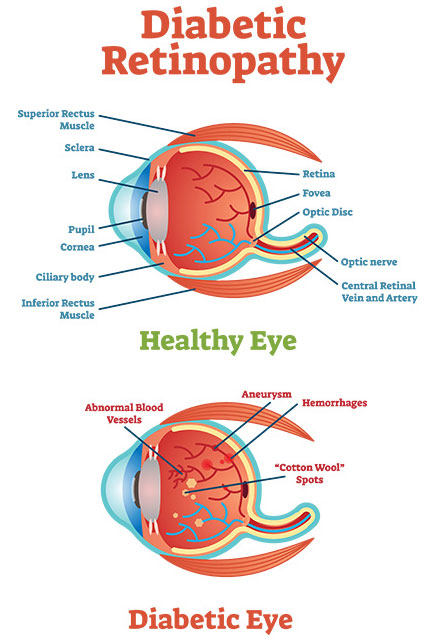
The microvascular complication occurs by the damage of smaller vessels. They include neuropathy, nephropathy, and retinopathy.
Retinopathy-
Retinopathy
It is one of the leading causes of vision loss worldwide and is the main cause of blindness in working-age adults in the USA. Initially, there are no symptoms until the extremely late stages. Although, the primary risk factors for diabetic retinopathy development are the duration and intensity of glycemic control. Uncontrolled hypertension, hyperlipidemia, and the presence of other complications such as diabetic nephropathy and neuropathy worsen the underlying retinopathy. We have to also control these risk factors for the prevention of diabetic retinopathy.
Prevention-
For diabetic patients, enhancing glycemic control and treatment of systemic conditions like hypertension and hyperlipidemia is essential to prevent vision loss. Also, various studies have proven that lowering glycated hemoglobin reduces the rate and progression of diabetic retinopathy. Prevention is done by the following methods –
Blood pressure control
Cholesterol-lowering therapy
Exercise
Neuropathy-
Neuropathy
Diabetic patients are also affected by neuropathies. There are two main neuropathies
Distal symmetric polyneuropathy – The presence of symptoms of peripheral nerve dysfunction in people with diabetes after the exclusion of other causes. This is because of inflammatory stress or oxidative stress which leads to the damage of nerve cells. However, patients with type 2 diabetes should check for distal symmetric polyneuropathy once a year, and with type 1 diabetes, in 5 years. Screening is done by taking a thorough history and examination of the patient. The patient may feel numbness and tingling and sometimes pain.
Cardiovascular autonomic neuropathy – symptoms of this condition are hypoglycemia, orthostatic hypotension, gastroparesis, Bowel irregularities erectile dysfunction, and other autonomic deregulations. Also, cardiovascular autonomic neuropathy is not present in early diabetes. It increases with time. Symptoms are lightheadedness, faintness n palpitations, or syncope. Variability in heart rate while standing is also an indicator of cardiovascular autonomic neuropathy
Other neuropathies – Neuropathic patients should also be screened for gastroparesis. by asking about symptoms like nausea, early satiety, or unexpected glycemia variations. Also, every patient with neuropathy should check for lower urinary tract symptoms such as incontinence and bladder dysfunction. Female sexual dysfunction including less libido, dyspareunia, and inadequate lubrication should screen.
Nephropathy –
Diabeticthy nephropathy. diabetic kidney disease. Proteins in the urine, cause damage to the glomeruli.
Although, nephropathy is common in patients with type 1 and type 2diabetes. It is 20 – 40% prevalent in patients with diabetes. the presence of reduce glomerular filtration rate (GFR) or increase urinary albumin excretion for at least 3 months in a diabetic patient.
Screening – screening is done once a time in a year on a patient with type 1 diabetes and five years on a patient with type 2 diabetes
If micro albumin urea is present then non-diabetic conditions causing albumin urea like urinary tract infection, haematuria, heart failure, febrile illness, severe hyperglycemia, and heavy exercise should be done more.
Prevention and treatment –
Lifestyle modification
Healthy eating
Exercise regularly
Weight loss
Acute complication of diabetes:
Acute complication includes:
Hypoglycemia or insulin reactions-
In this condition blood glucose level falls less than 50-60 mg/dl because of too much insulin or oral hypoglycaemic agents, significantly less food intake, or over-physical activity.
This condition can occur at any time of day or night. Although, this is more common before meals or meals get delay or fasting.
There are two categories:
Adrenergic symptoms- There is mild hypoglycemia because the blood glucose level falls, and the sympathetic nervous system stimulates, which causes a surge of epinephrine or norepinephrine.
Symptoms of mild hypoglycemia include- sweating, tremor, tachycardia, palpitation, nervousness, and hunger.
Central nervous system symptoms- in this condition, there is moderate hypoglycemia which leads to a fall in glucose level which deprives the brain cells of needed fuel for normal functioning also.
Signs of impaired function of the CNS may include:
Difficulty in concentration
Headache
Lightheadedness
Memory lapse
Confusion
Slurred speech
Impaired coordination
Emotional changes
Behavior changes
Severe hypoglycemia-
CNS function is impaired in hypoglycemia as the patient needs another person for treatment. Also, disoriented behavior, seizures, sleep problem, and low consciousness are symptoms of this condition.
Management of hypoglycemia:
The normal recommendation is 15 g of fast-acting, concentrated source of carbohydrates such as the following, given orally:
3-4 commercially prepared glucose tablets
4-6 oz of fruit juice or regular soda
6-10 hard candies
2-3 teaspoons of sugar or honey
If you are facing issues in dropping your weight, please take this free-body type assessment: Click here