General health tips include tips to keep healthy & lose weight.
What is a healthy life? A life where you have no disease condition or a life where your body is doing physically good,
or a life where your mind is at peace or a life where you have a social circle and well-being?
Well to answer this question, you should analyze your life and think about what actually health is.
Health as defined by WHO as a state of complete physical, mental and social well-being and not merely the absence of disease or infirmity.
So that means, health is not only just being free of a disease condition, but in order to be healthy, one must be sound physically, mentally, and socially.
Health tips not only include what one should eat and not to eat, but it also includes the practice to attain a complete state of health.
If you are doing well physically and mentally but not consuming the required amount of nutrition that your body requires,
you will not be able to achieve your health goal to the fullest. Physical activity, mental health, social well-being, and dietary habits go hand in hand to live a healthy life.
Health tips will provide you with an outlook of how you can be healthy by putting in just a few efforts and making your health a priority.
Because if your body is in a state of health, you will be in a state of overall well-being. So choose yourself and your health over anything else!
Anjeer is made of dried figs. Anjeer date barfi contains nuts that do not contain sugar. For sweetness, we will add dates in it a small amount mixed it with nuts, and crush coconut you can add it according to your preference. This Anjeer dated barfi is great this Diwali. It contains low fat which helps in weight loss.
Firstly Take Chopped Almond and Pista in the bowl mixed them all. Then roasted them all in pan together.
Take another pan add chopped date and fig in the pan and add water to it.
Gradually water gets evaporate and it will becomes soft.
Also add 1 tablespoon of ghee in the pan . So that now it will not get too much stick with the pan. Later on also add nuts mixture , cardamon powder ,cinnamon powder als coconut powder keep staring the mixture and see all get mix properly.
After some time when the better looks too sticky also add some nuts in it . keep staring it so that paste does not get stick to pain and mixted the nuts propely in it.
Placed butter paper in the tray also apply a little bit of oil in it. Place the better paper in the tray so that it get set on it . Later on place this in the referginter for over night .Next morning you can cut in small pieces .
So you can now can sever it in plate and enjoy this yummy barfi.
Eat only 1 or 2 pcs in the day.
Tips
Tip – Store this for only 5 days. Do not make so much that it will get waste and do notloos it freshness.
Tips- Pls use nonstick pan for this other wised this will gets too much stick with the pan .
If you are struggling shedding weight. You can talk to us by taking this assessment: Click here
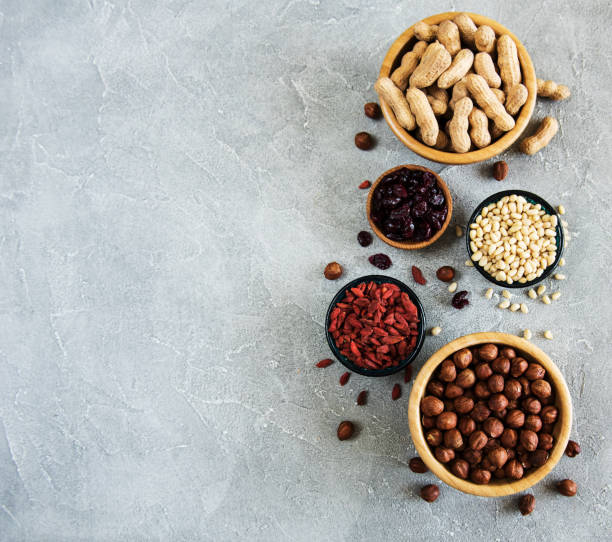
Healthy snacking improves overall health, curbs cravings, fights weight gain, regulates mood, boosts brainpower, and gives the energy one needs to keep going all day.
Having several snacks a day helps banish that postmeal sleepiness that comes from consuming too many calories at one sitting. Including protein, snacks will help derive an extra mental boost protein foods such as fish, meat, eggs, cheese, and tofu contain an amino acid that increases the production of neurotransmitters that regulate concentration and alertness
One way to prepare and serve fresh vegetables is through the roasting technique, a method of dry-heat cooking that allows you to cook the vegetables without added fat.
Roasted green peas represent one way to consume vegetables and they will add nutrition to your diet.
They provide only a modest amount of energy and represent a fairly low-calorie snack.
it’s a very Healthy snacking, and a Good snack for people on the weight loss journey!
Roasted seeds
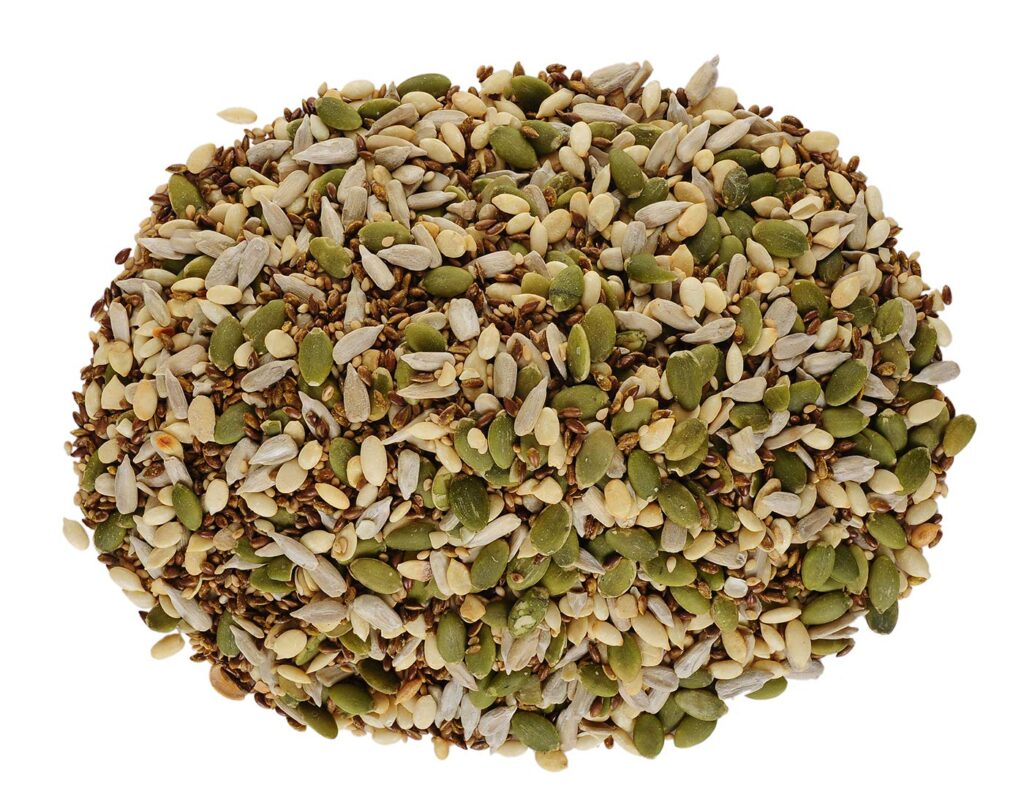
Roasted seeds mix
This gives the necessary nutrients to our bodies. It’s quite a good snack and gives a nutty flavor and extra crunch to any dish if added.
Seeds consist of all the requisite ingredients to make such a complex thing as a plant. Hence they are very nutritious and provide us immense health benefits.
They are a good source of monounsaturated fats and polyunsaturated fats and are also rich in vitamins, minerals, antioxidants, and fibers too.
If included in our diet routine they are said to help in reducing cholesterol, blood sugar, and high blood pressure.
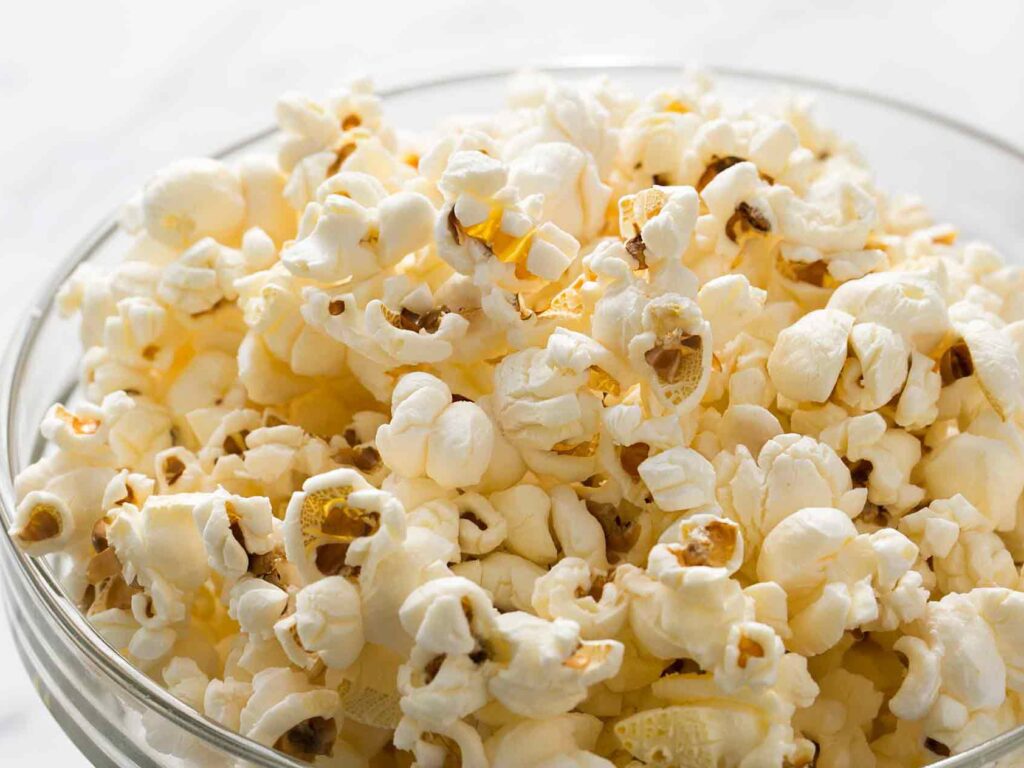
Popcorns
When they are air-popped and lightly seasoned, they are an efficiently healthy snack.
That is because it is a whole grain and high-fiber whole grains are known to lower risk of heart disease, diabetes, some cancers and other health problems.
In addition to nutrient fiber popcorn is also a good source of polyphenols which are antioxidants that have been linked to give health benefits such as better blood circulation and digestive health also it lowers the risk of certain cancers too.
Roasted Bajra
Bajra is also known as Pearl millet is a small grain with high nutritional value.
Bajra contains the nutrient niacin, a vitamin that plays a crucial role in lowering cholesterol levels also preventing heart disease.
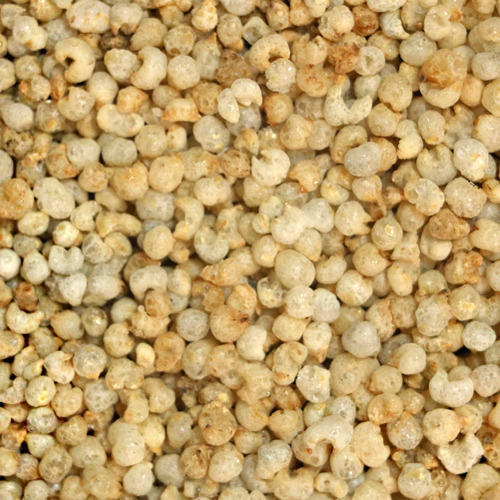
Roasted Bajra Mix is made from roasting the bajra grain in a roasting machine at a set temperature.
It is then mixed with some seasoning to give it a great taste. It is crunchy and a very healthy snack.
Roasted Jowar
Snacks Jowar (Sorghum) puff is Roasted and not fried. It is a healthy ready-eat snack.
Enjoy the chatpata flavor anytime whenever you feel hunger pangs.
It is totally gluten-free with a high fiber content.
Jowar was initially used for making food for domestic animals, however, later it was included in the diet of humans too for the amazing jowar benefits it provides with.
It mostly is found in regions with subtropical and tropical climates with grass native.
If you are struggling shedding weight. You can talk to us by taking this assessment: Click here
Healthy Eating Options Russia may not be the first to come to one’s mind when thinking of a food destination, but the country has plenty of delicious traditional dishes to eat. Visitors to Russia are often surprised to see the variety and flavors of the Russian cuisine, which is influenced by Russia’s connection to Europe, Asia, and the Middle East. The most classic Russian recipes are made of veggies and wheat, such as soups, porridges, and stuffed dough!
Healthy Eating Options are given bellow:
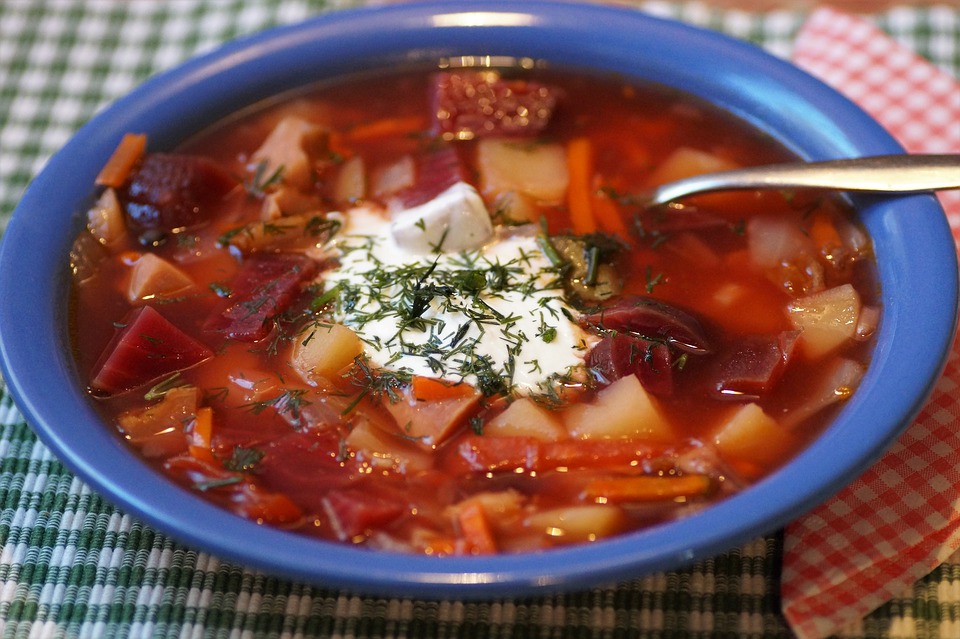
Borscht
It is a beet soup that originated in Ukraine and was quickly adopted as a Russian specialty as well. This soup is full of meat and sautéed vegetables, including cabbage, carrots, onions, and potatoes also. It can be served hot or cold and it is best served with a dollop of fresh sour cream on top.
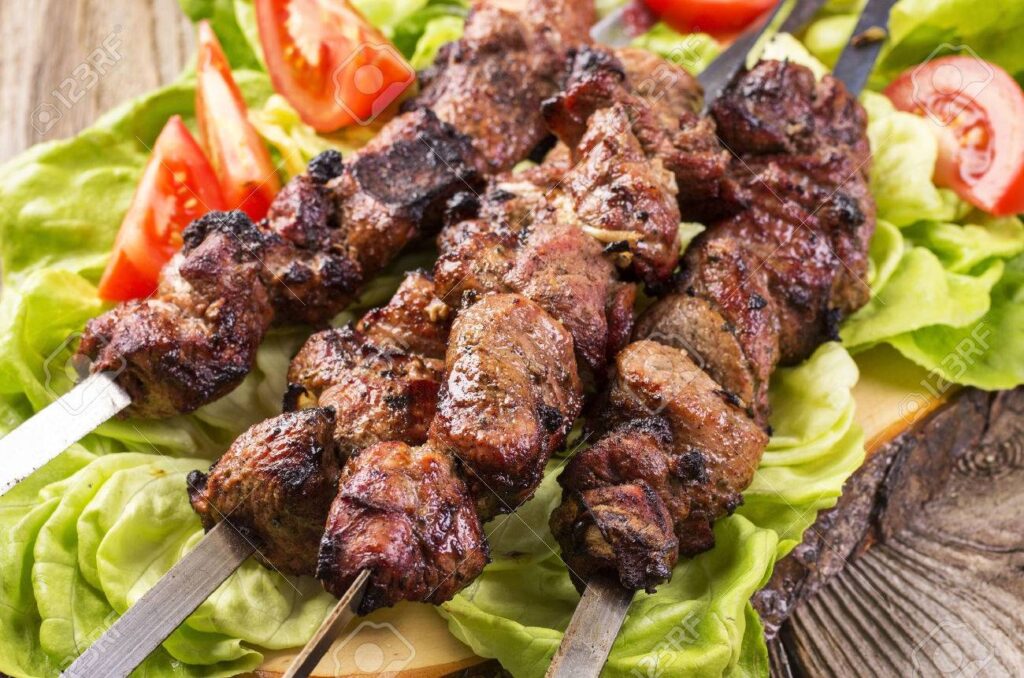
Shashlyk or shashlik
Russian kebabs are called shashlyk or shashlik. They consist of cubed meat and veggies grilled on skewers.
Beef stroganoff
This dish consists of strips of beef in a creamy sauce with mushrooms or tomatoes and it’s often served with rice, noodles, or potatoes.
This recipe has a long history and many variations for its preparation are also there.
Blini
Its round and thin, these little pancakes can be made with a variety of flours, but usually wheat.
They are most famously served with black or red caviar.
Barabulka
The Russian name “barabulka” is similar to both Turkish barbunya and the Italian word barbone and the meaning is “big beard”. In English these members of the goatfish family are called as red mullet. It can be tried oven-baked or fried.
Indian food
Its like dals, chapati, salad & curries etc. are all available at authentic Indian resturants. All the spices and other ingredients are sourced from India and the neighboring Asian countries.
Salads
Salads and more are also available as some of the best vegan foods at pocket-friendly prices. It is the place to be at if one is looking for healthy and fresh eating options.
If you are struggling shedding weight. You can talk to us by taking this assessment: Click here
Fishhave been an essential part of our food as far as the history of humanity goes. 97% of the earth underwater the fishes have always been a great source of food for man and animal alike.
Fish has a broad diversity, easy availability and nutrient content, and a number of other reasons that make it a hit across the globe. Fishes or should we be more precise seafood is prestigiously known as a ‘health food’ all over the world.
There are so many Fishes in India
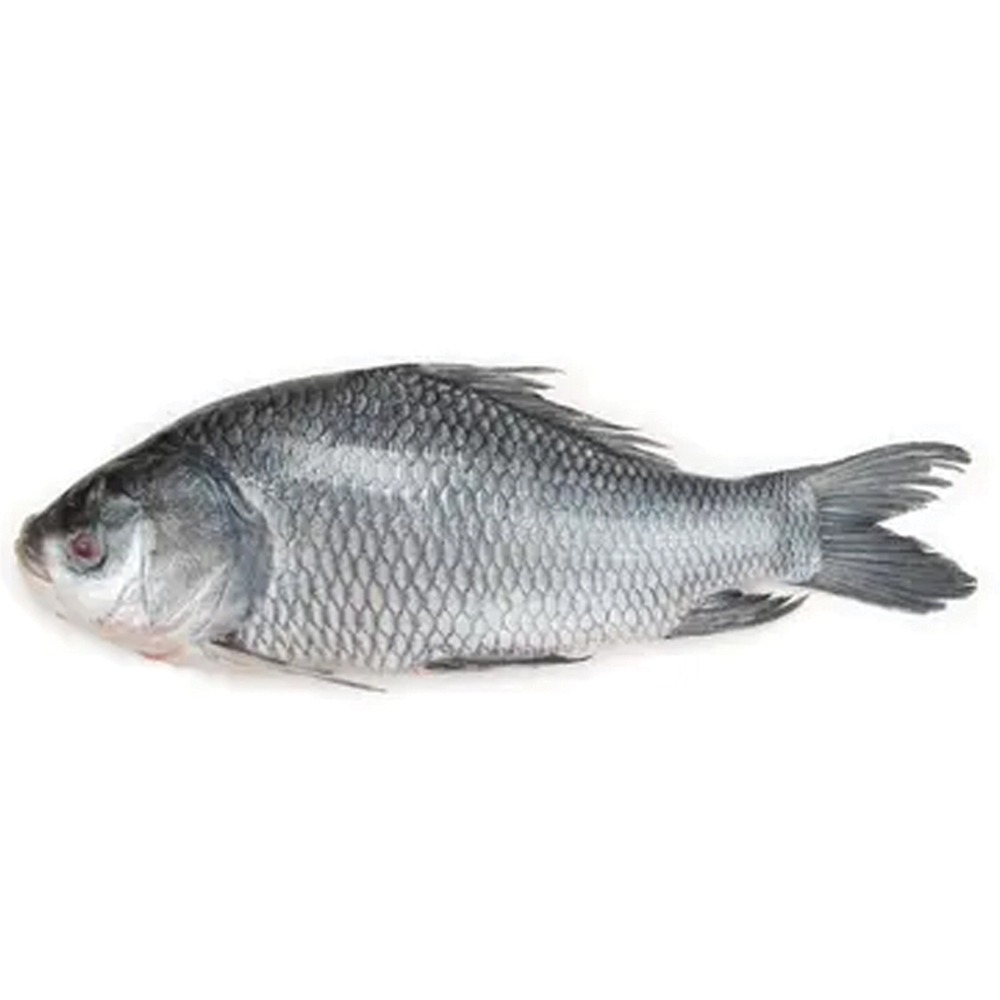
Rohu
Rohu fish is majorly available in Northern as well as central India. It is also known as Carpo fish. Rohu is enriched with a good amount of proteins in it, also packed with Omega 3 fatty acids and vitamins A, B, and C.
Rani
Rani (Pink Perch) is a common freshwater fish in India. It’s pink in color and small in size, this fish has a mild taste when it’s cooked. Due to just 4- 5% of body fat in it, this is not oily and hence it is called a lean fish. This is your go-to-go fish type if one is planning to lose weight.
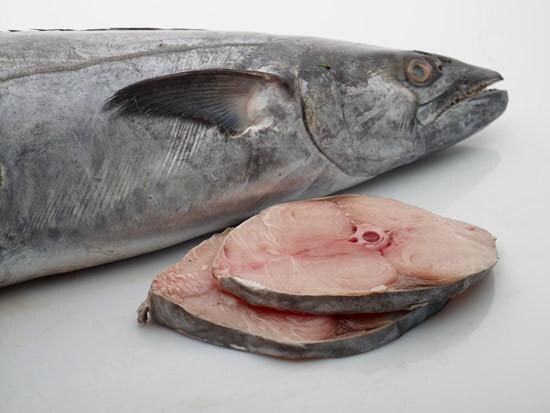
Surmai
This fish is very high in protein, vitamins, and minerals. This fish is extremely popular as well as an expensive one too. It is most popular in South and Central India. Surmai or King Mackerel is the kingfish of the Indian ocean. It’s high in mercury content but that does not mean that it cannot be consumed.
Rawas
This is a widely available fish, it consists of essential amino acids that promote growth and help maintain muscle tissue mass.
The protein found in Indian salmon or Rawas fish helps the body to maintain a healthy metabolism which promotes weight loss. Rich in omega 3 and 6 fatty acids and it may contain contaminants such as PCBs. So do not have more than 170 grams in a week.
Katla
A fish is widely found in the lakes and rivers of North India and Assam, this is enriched with proteins and vitamins. It is low in calories and a healthy option for people losing weight. The mercury level in this fish is moderate, which is safe enough to consume.
Paplet
Its known as the Indian butterfish, Pomfret or Paplet fish is widely found in South Asia, including the Indian Ocean. The taste is quite delicious, this is rich in protein and has a tremendous amount of omega 3 fatty acids. Silver or white pomfret and black pomfret are the two most popularly sold fishes in India.
Hilsa
It is a very popular Bengali fish and the national fish of Bangladesh. It is found in Odisha, West Bengal, Assam, Andhra Pradesh, and Gujarat. It is a delicacy not just in India but it is also enjoyed all over South Asia. Hilsa fish is among the costliest fish in India with the cost per kg going up to INR 3000 usually. This is being highly fished and the population is gradually decreasing in the sea.
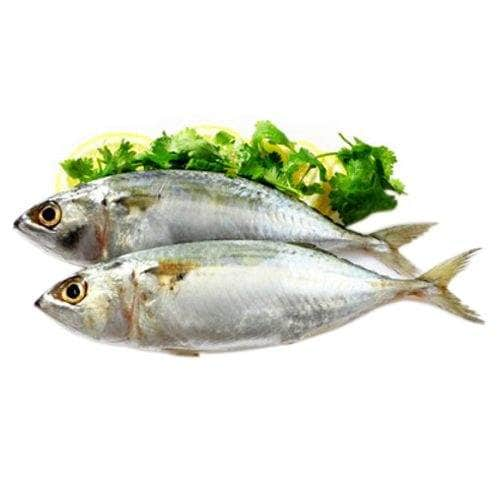
Bangda
Indian Mackerel or Bangda is rich in Omega 3 and Selenium which is great for cardiovascular health. It also helps lower blood pressure, enhances eyesight, and reduces cholesterol levels. It is again a good fish to go for if planning to lose weight. The best part is that it is very reasonably priced. Mackerel is a low mercury level fish and hence it can be enjoyed by all!
Pedvey
it (Indian Oil Sardines) is known to be a rich source of nutrients such as proteins, vitamins, and minerals. It helps in making bones stronger, preventing inflammation, and relieving stress too. They are commercially caught mainly in places like Karnataka, Goa, Kerala, and southern Maharashtra.
Singhara
This fish is commonly found in India. Low in mercury, it is also a rich source of protein, with 49 percent of the daily value in one fillet. Singhara also contains other nutrients like choline and is a good source of healthy, essential fats. Catfish/ Singhara have both omega-3 and omega-6 fatty acids in them.
If you are struggling shedding weight. You can talk to us by taking this assessment: Click here
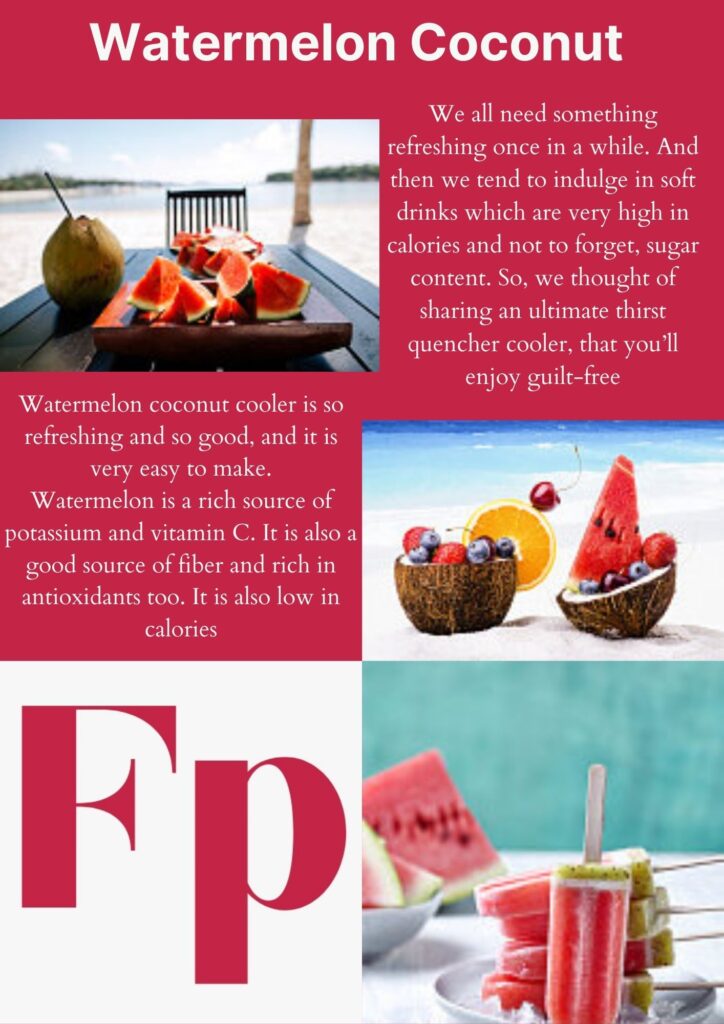
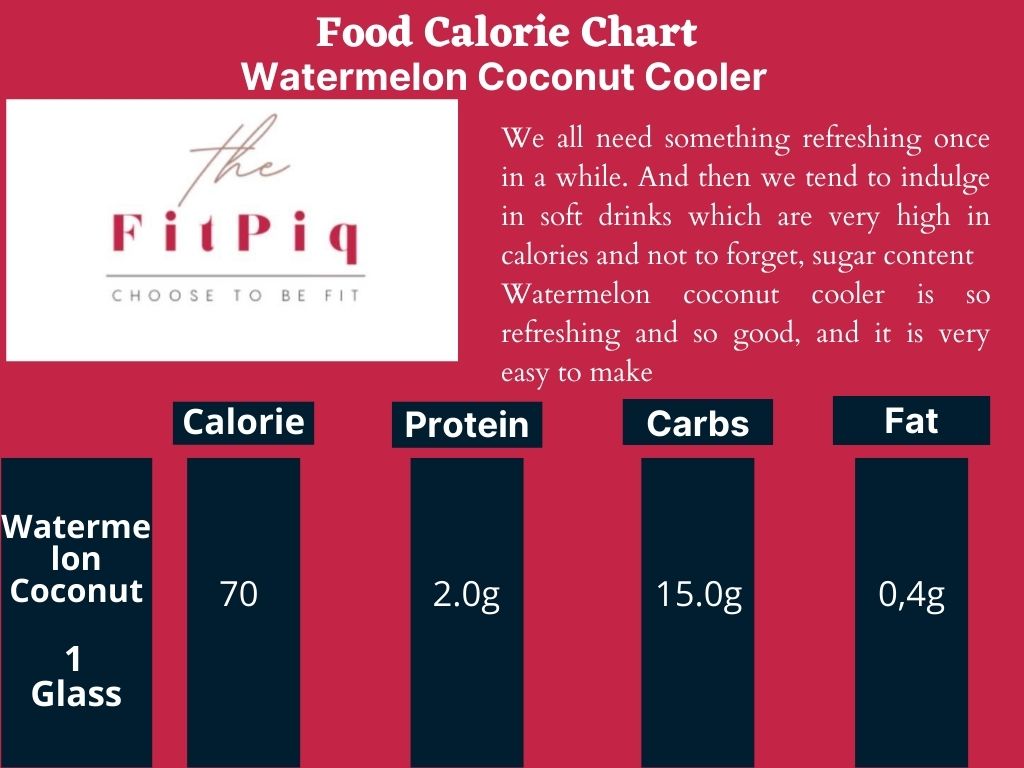
Watermelon Coconut Cooler is the best in summer. We all need something refreshing once in a while. And then we tend to indulge in soft drinks which are very high in calories and not to forget, sugar content.
So, we thought of sharing an ultimate thirst quencher cooler, that you’ll enjoy guilt-free. Watermelon coconut cooler is so refreshing and so good, and it is very easy to make.
Watermelon is a rich source of potassium and vitamin C. It is also a good source of fiber and rich in antioxidants too. It is also low in calories.
And we all know that watermelon is high in water, it is 90% water, so, it also fulfills our water requirements and keeps us hydrated.
Coconut water is a low-calorie drink that is loaded with nutrition. It is rich in electrolytes, and it aids in regulating electrolyte balance in our bodies. It is a rich source of potassium.
This is an easy-to-make recipe, that will take hardly 10 minutes. We have not added sugar in this recipe, because the sweetness naturally comes from watermelon and coconut water.
You just need 3 ingredients for this recipe, watermelon, coconut water, and mint leaves. Watermelon and mint leaves go along really well, so do try this combination. You can also add lemon juice to the cooler, or skip it as per your choice.
Preparation time: 10 minutes
Total time: 10 minutes
Serving: 1 glass
Let us get started with the recipe for a Watermelon coconut cooler
Learn how to make more potassium rich recipe by visiting this space!
Ingredients that you will need for the recipe:
Watermelon: 3-4 cups seedless and chopped
Coconut water: 1 cup
Mint leaves: 5-6 (crushed and chopped)
Black salt: as per taste
Methods for Watermelon Coconut Cooler :
1 Cut the watermelon into cubes and take out its seeds.
2 Add watermelon, coconut water, black salt in a mixer and blend the ingredients till smooth.
3 Serve fresh with a slice of lemon and mint leaves.
If you are struggling shedding weight. You can talk to us by taking this assessment: Click here
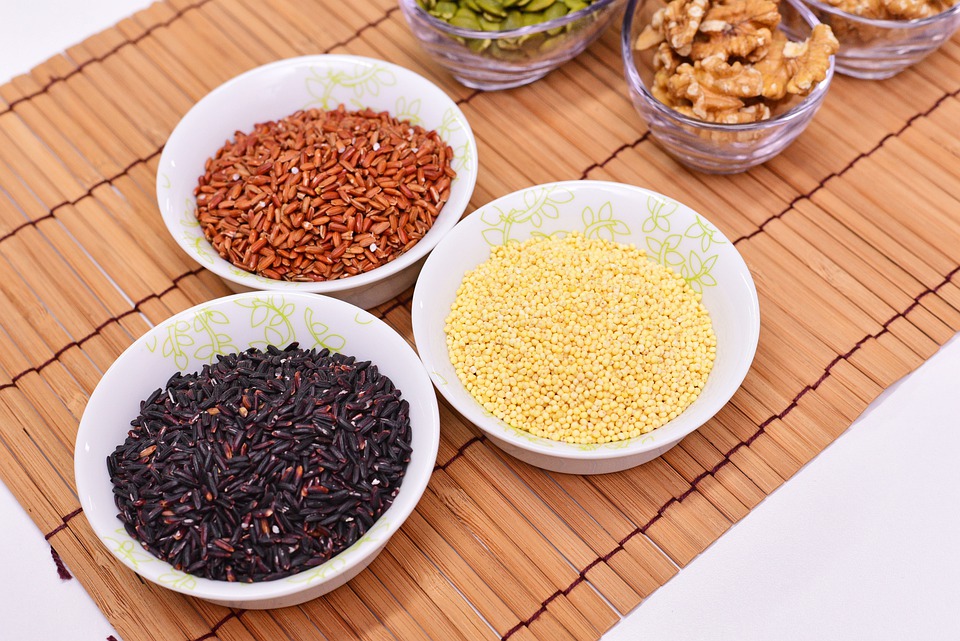
Millets are gluten-free crops that have been used in India for ages. They can play an important role in preventing and curing various health issues. Millets have significant nutrient-rich composition.
Millets are a large source of fiber, minerals such as magnesium, phosphorous, iron, calcium, zinc, and potassium. They are healthy but at the same time, they have taste.
Types of Millets & there uses :
Jowar Millet(Sorghum)
Sorghum is commonly known as Jowar . Traditionally it was used as a grain to make flatbreads/ Rotis, porriage, thepla, cookies, poori, dosa, sheera & thalipeeth.
Jowar consists of nutrients such as iron, protein, and fiber. It can help in reducing cholesterol levels as it has a component called policosanols (part of sorghum wax). It’s beneficial for people who have a condition known as Celiac disease (wheat intolerance).
Ragi Millet(Finger)
Ragi is popularly known as Finger millet or Nachini. The grain actually originated in Africa and has been cultivated in Uganda and Ethiopia for many years. Finger Millet is a healthy substitute for rice and wheat. Ragi millet is a powerhouse of nutrition.
Contains nutrients like protein and amino acids and this gluten-free millet is good for brain development in growing kids. Used to make items such as chapati, poori, Ragi Idli, khichadi, apple ragi Halwa, cookies, cakes, roasted namkeens, etc.
Bajra Millet(Pearl)
Bajra is a popular grain in North-West India, including the states Rajasthan and Haryana. Pearl millet has its health benefits. It helps in controlling cholesterol levels and diabetics.
It is the richness of iron, protein, fiber, and minerals such as calcium and magnesium. The daily consumption or inclusion of this millet can deliver great benefits. Used to make dishes – chapati, khichdi, cheela/dosa, cakes, thepla, and wraps.
Barnyard Millet (Sanwa) – It’s locally known as Sanwa, this millet is a gluten-free source of both insoluble and soluble fibers. Barnyard millet can be used to make, porridge, Khichdi, and even Pulao!.
This millet is nutrient-dense and has a high fiber content, which can effectively help in weight loss. It’s a rich source of calcium and phosphorous and helps in bone-building too. Its daily consumption helps fight bone diseases.
Proso millet (While millet)- This millet is a unique Indian Millet and is commonly known as white millet, Kashif millet, or hog millet. This millet is now cultivated in India, the Middle East, Turkey, Russia, and the United States.
It is gluten-free and has nutrients such as carbohydrates, protein, niacin (Vitamin B3), and fatty acids. It is used to make dishes like upma, dosa, idli, khichdi, and pulao.
Little millet (Samai) – The Little Millet (also known as samai) is believed to have originated in India. It is grown and used for food almost exclusively in our country.
Samai consists of nutrients such as B-vitamins, minerals like calcium, iron, zinc, and potassium and little millets can provide important nutrients which further help in weight loss.
It is used in many traditional dishes in south India. Little millet has high fiber content in it. Sometimes it can be a healthy replacement for rice. it i Used to prepare items such as poori, paratha, kheer, upma & porriage.
Kodo Millet(Kodu) –
This is thought to be originated in Africa and was introduced to India. But now grown primarily here. Kodo millet is popular by the local names in India like Arikelu in Telugu, Varagu in Tamil, and Kodra in Hindi.
It is very easy to digest and consists of a high amount of lecithin and is excellent for strengthening the nervous system.
Kodo millets are rich in nutrients such as B vitamins, especially niacin, B6, and folic acid, as well as the minerals such as calcium, iron, potassium, magnesium, and zinc. Kodo millets are gluten-free and are good for people who are gluten intolerant.
Consumption is very beneficial for postmenopausal women suffering from signs of cardiovascular diseases, such as high blood pressure and high cholesterol levels. Used to make various dishes – idli, dosa, pulao, kheer, upma, khichdi, etc.
If you are struggling shedding weight. You can talk to us by taking this assessment: Click here
Immune-System Boosting is the process that defends the body from infections and sometimes, the body may be unable to elicit enough responses that can eliminate them.
So, it’s important to include immune-System Boosting foods in the diet to strengthen the body against seasonal infections such as flu and viral infections, cancer, arthritis, allergies.
Sometimes during a cold or flu season, some people do not get infected despite being in contact with those infected persons, considering that the flu and cold are spread by air droplets. This is because some people have a stronger immune system as compared to others.
The immune system is the first line of defense against antigens that invade the body. With a strong immune system, there is less chance of contracting some illnesses but not totally.
Here are some 8Immune-System Boosting Foods
In Ghee 8Immune-System Boosting
It is a common misconception that ghee is fattening. Well, it’s one of the healthiest Indian foods and should be a part of one’s daily diet.
This Indian food item has benefits of vitamin A, K, E, Omega-3, and Omega 9 essential fatty acids.
It is also a source of healthy fat and butyrate. Pure ghee made of cow milk produces heat and energy in the body that gives warmth.
It keeps the digestive system, gut, skin, and hair healthy. Add a tablespoon of ghee to your rice or chapati to enjoy its amazing health benefits.
It is a winter superfood loaded with the benefits of healthy nutrients and vitamins. It’s the richest source of vitamin C, a nutrient known to boost immunity.
It contains about 20 times more vitamin C than oranges or any other citrus fruit and hence is one of the healthiest foods.
Amla provides benefits such as it cleanses the colon, removing excess toxins from the body, and is known to be effective against dandruff and other skincare problems.
There are different products of amlas available in the market such as candies, juice, and pickle. Maximum nutrients from this fruit can be gained if it’s eaten in raw form, every morning on an empty stomach.
Jaggery –
Its commonly known as gur in Hindi. The healthier alternative of sugar helps to produce heat in the body. It also contains nutrients like iron, magnesium, and potassium.
These nutrients and vitamins help to dilate blood vessels and produce warmth in the body and also cleanse the lungs.
Replacing the regular sugar with jaggery wherever necessary, to give a boost to immunity. Peanut and jaggery chikki can be eaten to increase the intake of this food item in the diet.
Spiced Tea-
Fennel seeds, cardamon, black pepper, and cinnamon are some common spices that can be used to prepare healthy spiced tea.
Tulsi tea and a combination of jaggery and ginger can be included, to fight the cold flu problems. These are great to increase immunity.
Chyawanprash –
To boost immunity in the winters season, there is nothing better than eating Chyawanprash. Its made up of different kinds of Ayurvedic herbs and roots.
Chyawanprash is a treasured Indian immunity-boosting food item. Consuming 1 tsp of it daily will help in protecting your body from cough & colds!
Turmeric root and green garlic-
They are commonly available in winters and one must include them in the diet. Both the roots are known for their anti-inflammatory as well as antioxidant properties.
They protect the body from the damage caused by free radicals present in the environment and keep chronic diseases at bay.
Pickle of turmeric and garlic root can be made by adding some salt and ghee or chopping them and adding in the food.
Tulsi (holy basil) –
It has numerous health benefits. The green leaves found in every Indian household acts as a respiratory system rejuvenating herbs.
Its properties such as immunomodulatory, antitussive, and expectorant boost immunity and keep the lungs clean.
Tulsi leaves can be chewed every morning before breakfast or tea with tulsi leaves & ginger can be made. Both of them are equally beneficial.
Turmeric milk (Golden milk)-
Milk contains nutrients like calcium, protein, and vitamin B12, and turmeric is known for its anti-inflammatory and anti-oxidative properties. A combination of both can help fight different health issues.
Add a pinch of turmeric and little jaggery in a glass of warm milk and drink it before going to bed to stay at the pink of your health always.
If you are struggling shedding weight. You can talk to us by taking this assessment: Click here
5.2 Intermittent Fasting is also called The Fast Diet, is currently the most popular intermittent fasting diet.
The 5:2 diet gets its name because it involves eating regularly for 5 days of the week while drastically limiting caloric intake on the other 2 two days.
If a person regularly eats about 2,000 calories per day will eat 500 calories on fasting days for two days
How to do the 5.2 Intermittent Fasting?
Five days per week, you have to eat a normal diet. You can not eat junk food or preserved food.
Then, on the other two days, you reduce your calorie intake to a quarter of your daily needs.
500 calories per day for women.
600 calories per day for men.
It’s important to eat a “normal diet” so that does not affect our diet.
Do not eat junk food, if you eat junk food you won’t lose any weight, and you may even gain weight.
You should eat the same amount of food which you are consuming on normal days.
we should have a balanced diet.
The diet works by limiting your daily calorie intake to just 25 percent, but only for two days of the week, which still delivers results.
For two days a week, you will eat only 500 calories for women and men-600. For the rest of the five days, you should have a normal diet. You should lose around 1.5lb a week.
The two days when you are fasting try to eat normally on other days. Simply carry on with the plan, using 5:2 diet meal plans, so that you will achieve your goal.
On the other days you eat normally, you should be aiming for around 2,000 calories a day,
Your 500-calorie days will help to stabilize your insulin levels and hunger
If we fast for any two days in a week at that time calories in taken will decrease result our body insulin level will fall down and
body will use store fat in the body in this form fat used in the form of energy. Hence, we lose weight if we let our insulin levels go down, for long enough, we lose the burn fat.
Is the 5:2 diet healthy?
Fans of the 5.2 Intermittent Fasting say that not only will it help you to lose weight but that it can increase lifespan and protect against diseases such as heart disease, Alzheimer’s, and cancer.
This fasting can have some side effects, dizziness, lack of energy, irritability, headaches, and trouble sleeping, so make sure you’re prepared for this kind of problem.
“There are a number of laboratory studies that demonstrate this approach to calorie restriction can have beneficial effects on blood pressure, blood glucose, and cholesterol levels, and there is some limited data in humans also confirming these observations.’
Says Clinical Nutritionist, Mike Wakeman. this diet is the most effective in weight loss and also helps the overall health of the person.
What time you should eat in 5.2 Intermittent Fasting?
calorie restrictions are strict on the two days spent fasting, You can choose your day according to your preference. You have to restrict yourself up to 500 calories for that 2 days.
You will need to be committed and strong-willed as you’re cutting your calorie intake by 3/4, but you will achieve what you want to achieve.
We asked Clinical Nutritionist, Mike Wakeman, when is the best time to have breakfast, lunch, and dinner. He says; ’Researchers from the University of Alabama conducted a study looking at the effect of time of eating on the benefits of intermittent fasting.
In the controlled eating scenario, all meals were fitted into an early eight-hour period of the day (7 am to 3 pm), or spread out over 12 hours (between 7 am and 7 pm).
What kind of diet need to take?
These food are low in fats.
Natural yogurt with berries
Cauliflower rice
Lots of fresh vegetables
Fish
Eggs
Small portions of lean meat
Soups
In this you have to consume 500 calories .you can split meal take this two time like lunch and dinner or in breakfast and dinner only. best way to eat little and throughout the day.
“Essentially, eat a plant-based, Mediterranean-style diet with lots of fruit and vegetables, legumes such as beans and lentils, along with whole grains, and healthy fats and protein sources.
According to says, Mike. “Eat refined grains and sugar need to be avoided.
Avoid eating and snacking at night-time.
Need to do physical activities alike Keep participate in exercise programs skipping, personalized, to enhance your metabolism and optimize the effect of your diet. This will help you to reduce weight and also your health.
Consuming this good diet will make you more active and energetic thought the day.
In this diet, you need to drink as much water as, To keep you hydrated, and may help you to stave off hunger for a little longer.
Black or herbal teas
Black coffee
Diet drinks
Try our hot drink so that we do not gain weight
Can you exercise on a 5:2 diet?
Research shows fasting has no negative effects on the ability to do a moderate activity. Even so, it’s important to listen to your body.
Also, doing cardio or exercise can help your body tap into its fat stores, and maximize the benefit of your fasting days.
High-intensity interval training could be your best choice, as short bursts of intense exercise have been shown to be hugely effective, with the fat burning lasting for hours after the workout is finished.
5:2 diet more effective for weight loss?
One of the most common reasons for opting for the 5:2 diet help us lose weight.
Some people may opt for the 5:2 diet just to eat a little healthier and manage their food better but losing weight on the 5:2 diet is quite common, if you follow it correctly.
According to Clinical Nutritionist, Mike Wakeman, who stated: “‘So, the answer is yes,
The 5:2 diet is effective for weight loss but probably no more so than other diets that involve calorie restriction.
If you are struggling shedding weight. You can talk to us by taking this assessment: Click here
Alcohol consumption is on the rise, even though happy hour at bars and restaurants is on hold in many parts of the world. How have you felt lately about alcohol? Just tipsy, got into a hangover, or did you fall asleep post alcohol?
Many times while we party we do not realize how much is too much and we end up consuming a lot and a lot of alcohol. l has wide-ranging effects on the body. There are purported benefits, as well as pitfalls, to consuming alcohol.
Once it enters your system, it triggers immediate physiological changes in the brain, heart, and liver, among other organs. Over time, these changes can lead to long-term health complications if you’re drinking too much.
There’s a lot you may not know about this popular substance that’s found in varied varieties ranging from beer, wine, gin, vodka, tequila, whiskey, rum and you can consume it in several forms like cocktails, shots, pints, and towers of beer or simply plain like whiskey.
Let’s understand each by its calories:
1. Beer(Alcohol)
Beer: Each category of beer can have a wide variety of calories. Most 12-ounce cans of light beer have about 4 percent alcohol and 100 calories
A beer, like Budweiser of the same size, is fairly light, too, with 5 percent alcohol and 150 calories. The following chart shows you the number of calories per pint for each brand.
But the calories begin to increase when you move from the above-mentioned alcohol having 5% alcohol content to Belgian brews, IPAs, and stouts, which often contain 7 to 10 percent alcohol.
If you consume a higher alcohol percentage, add up to another 100 calories each to the above calculations.
Calories by brands both outside and India: explained. Table 1.1 explains calories in 330 ml beer pint.
%
Calories
Budweiser Select 55
2.4
55
Miller 64
2.8
64
Corona Premier
4
90
Budweiser Select
4.3
100
Busch Light
4.1
100
Dogfish Head Slightly Mighty Lo-Cal IPA
4
100
Michelob Ultra or Miller Lite
4.2
100
Victory Easy Ringer Lo-Cal IPA
4.3
100
Coors Light
4.2
100
Corona Light
4
100
Sufferfest Repeat Kolsch Style
3.5
100
Heineken Light
3.3
100
Lagunitas DayTime IPA
4
100
Miller High Life Light
4.1
110
Bud Light
4.2
110
Busch
4.3
110
Pabst Blue Ribbon Easy
3.8
110
Bud Ice
5.5
120
Michelob Golden
4.6
120
Michelob Light
4.1
120
Sam Adams Light
4.3
120
Guinness Draught Stout
4.2
130
Bud Light Platinum
6
140
Busch Ice
5.9
140
Allagash Saison
6.1
140
Dogfish Head SeaQuench Session Sour
4.9
140
Founders All Day IPA Session Ale
4.7
140
Heineken
5
140
Miller Genuine Draft
4.7
140
Miller High Life
4.6
140
Pabst Blue Ribbon Original
4.8
140
Sufferfest Head Start Stout
4.5
140
New Belgium Dayblazer Easygoing Ale
4.8
140
New Belgium Slow Ride Session IPA
4.5
140
Budweiser
5
150
Allagash White
5.2
150
Coors Banquet
5
150
Sierra Nevada Sierraveza
5
150
Corona Extra
4.6
150
Michelob Lager
4.8
160
Corona Familiar
4.8
160
New Belgium Fat Tire Amber Ale
5.2
160
Sufferfest FKT Pale Ale
5.5
170
Blue Moon Belgian White
5.4
170
Sierra Nevada Sidecar Orange IPA
6.8
170
Sufferfest Flyby Pilsner
5.1
170
Shock Top Belgian White
5.2
170
Bell’s Amber Ale
5.8
180
Sierra Nevada Pale Ale
5.6
180
Samuel Adams Boston Lager
5
180
Samuel Adams New England Pale Ale
5.5
180
Bell’s Official Hazy India Pale Ale
6.4
190
Dogfish Head 60 Minute IPA
6
190
Budweiser Copper Lager
6.2
200
New Belgium Voodoo Ranger IPA
7
200
Samuel Adams Rebel IPA
6.5
200
Dogfish Head American Beauty Hazy Ripple IPA
7
210
Bell’s Two Hearted Ale
7
210
Sierra Nevada Hazy Little Thing IPA
6.7
210
Sierra Nevada West Coast Style Stout
5.8
210
Bell’s Kalamazoo Stout
6
220
Allagash Black
7.4
230
Allagash Tripel
9.1
240
Sierra Nevada Torpedo Extra IPA
7.2
240
New Belgium Trippel
8.5
240
Allagash Curieux
10.4
260
Victory Golden Monkey
9.5
260
Dogfish Head 90 Minute IPA
9
290
Sierra Nevada Hoptimum Triple IPA
9.6
310
Figure 1.1
Alcohol Content in Indian beers. Table 1.2 explains calories in 330 ml beer pint.
1.2 Indian beer vs calories
2. Wines
Wines: Wine is an old-age tradition that has been around for centuries. It is a sophisticated drink that takes years to produce to achieve the perfect taste.
Every bottle is fermented with science and history. And to put in simple classification, you can find them in either red or white wine.
More complex categories like port wine, sparkling wine, rose wine, fortified wine, etc can also be enjoyed.
Let’s understand the calories in wine. Table 2.1 explains calories per glass which is 150 ml -170 ml or 6 oz. Each bottle of wine is sized 750ml which means that you can end up consuming 4-5 glasses of wine in each bottle.
%
Calories
FitVine Prosecco
11
110
Carlo Rossi White Zinfandel*
8
110
Yellow Tail Sauvignon Blanc
11.6
120
Yellow Tail Super Crisp Chardonnay
11.7
120
Yellow Tail Pinot Grigio
11.9
120
Yellow Tail Riesling
11.3
120
Carlo Rossi Sweet Rosé*
9.2
120
Yellow Tail Moscato
7.5
120
Yellow Tail Pink Moscato
7.5
120
Carlo Rossi Pink Moscato Sangria*
6.5
120
Carlo Rossi Moscato Sangria*
6.8
120
FitVine Pinot Grigio
13.4
130
FitVine Rosé
12.4
130
Yellow Tail Chardonnay
13.2
130
Sutter Home White Zinfandel
NA
130
Sutter Home Moscato Sangria
NA
130
FitVine Chardonnay
13.4
140
FitVine Sauvignon Blanc
13.4
140
FitVine Pinot Noir
13.9
140
FitVine Cabernet Sauvignon
13.9
140
FitVine Syrah
13.9
140
Yellow Tail Cabernet Sauvignon
13.9
140
Yellow Tail Merlot
13.9
140
Yellow Tail Pinot Noir
14
140
Yellow Tail Shiraz
13.9
140
Yellow Tail Shiraz Cabernet
13.8
140
Barefoot Sauvignon Blanc*
12
140
Carlo Rossi Cabernet Sauvignon*
12.9
140
Barefoot Rosé*
10.5
140
Barefoot White Zinfandel*
9
140
Sutter Home Chardonnay
NA
140
Sutter Home Merlot
NA
140
Sutter Home Pinot Grigio
NA
140
Sutter Home Pinot Noir
NA
140
Sutter Home Rosé
NA
140
Barefoot Cabernet Sauvignon*
12.7
150
Barefoot Malbec*
13
150
Barefoot Chardonnay*
13
150
Barefoot Pinot Noir*
13
150
Barefoot Pinot Grigio*
12
150
Yellow Tail Sangria
11.5
150
Barefoot Riesling*
8
150
Carlo Rossi Sweet Red*
8
150
Sutter Home Sauvignon Blanc
NA
150
Sutter Home Zinfandel
NA
150
Sutter Home Malbec
NA
150
Sutter Home Cabernet Sauvignon
NA
150
Sutter Home Moscato
NA
150
Barefoot Merlot*
13.5
160
Cupcake Vineyards Prosecco
NA
160
Cupcake Vineyards Riesling
NA
160
Carlo Rossi Chardonnay*
12
160
Barefoot Moscato*
9
160
Barefoot Pink Moscato*
9
160
Sutter Home Riesling
NA
160
Sutter Home Sweet Red
NA
160
Sutter Home Pink Moscato
NA
160
Cupcake Vineyards Pinot Grigio
NA
170
Cupcake Vineyards Rosé
NA
170
Cupcake Vineyards Sauvignon Blanc
NA
170
Carlo Rossi Red Sangria*
10
170
Sutter Home Sangria
NA
170
Sutter Home Red Moscato
NA
170
Cupcake Vineyards Malbec
NA
180
Cupcake Vineyards Chardonnay
NA
180
Cupcake Vineyards Cabernet Sauvignon
NA
180
Cupcake Vineyards Pinot Noir
NA
180
Cupcake Vineyards Petite Sirah
NA
180
Cupcake Vineyards Moscato
NA
180
Cupcake Vineyards Merlot
NA
190
Cupcake Vineyards Shiraz
NA
190
Cupcake Vineyards Merlot
NA
190
Cupcake Vineyards Shiraz
NA
190
2.1 Wines and calories
3. Liquor Alcohol
Hard Liquor: Most of the time, we prefer to stick to a peg of whiskey or 2 shots of tequila or a max of 2 vodka cocktails.
Let’s understand the breakup for our liquor variety. 3.1 figure shows alcohol content and calories in 1.2 oz or approx 40 ml alcohol.
3.1 Hard liquor
Now, here is the deal. If you see, most beers (1 pint) are ranging between 100-300 calories, a glass of wine is 100-200 calories and the above-mentioned gin/rum/vodka/whiskey is also around 100-150 calories.
But the real differentiators are alcohol percentage, sugar content and quantity intake each time we drink alcohol.
If you see, % alcohol is quiet high with gin/vodka/whiskey/rum that is why you end up only sipping between 30-60 ml adding up to no sugar intake vs beer/wine adding upto many pints or glasses to feel high or tipsy to enjoy a Saturday night party.
4. Cocktails Alcohol
Mixing Alcohol and creating cocktails: Now each time we blend each of the above we end up consuming way more calories than all of the above.
For example, mixing gin+vodka+rum+juice may add up to (100+150+100+250=550 calories) over 550 calories or above in just 1 cocktail drink. In this chart, here are a few examples to explain the same:
Alcohol mix – Cocktails
Alcohol, calories break-up: Overall
BEVERAGE
SERVING SIZE
CALORIES
Beer
Beer (light)
12 oz (355 ml)
103
Beer (regular)
12 oz (355 ml)
153
Beer (higher alcohol, craft beers)
12 oz (355 ml)
170 to 350
Distilled Alcohol
Gin (80 proof)
1.5 oz (45 ml)
97
Gin (94 proof)
1.5 oz (45 ml)
116
Rum (80 proof)
1.5 oz (45 ml)
97
Rum (94 proof)
1.5 oz (45 ml)
116
Vodka (80 proof)
1.5 oz (45 ml)
97
Vodka (94 proof)
1.5 oz (45 ml)
116
Whiskey (80 proof)
1.5 oz (45 ml)
97
Whiskey (94 proof)
1.5 oz (45 ml)
116
Liqueurs
Coffee liqueur
1.5 oz (45 ml)
160
Coffee liqueur with cream
1.5 oz (45 ml)
154
Crème de menthe
1.5 oz (45 ml)
186
Mixed Drinks
Bloody Mary
4.6 oz (136 ml)
120
Chocolate martini
2.5 oz (74 ml)
418
Cosmopolitan
2.75 oz (81 ml)
146
Daiquiri
2.7 oz (80 ml)
137
Highball
8 oz (235 ml)
110
Hot buttered rum
8 oz (235 ml)
292
Mai Tai
4.9 oz (145 ml)
306
Margarita
4 oz (120 ml)
168
Mimosa
4 oz (120 ml)
75
Mint Julep
4.5 oz (135 ml)
165
Mojito
6 oz (177 ml)
143
Pina colada
6.8 oz (200 ml)
526
Rum and Coke
8 oz (235 ml)
185
Rum and Diet Coke
8 oz (235 ml)
100
Tequila sunrise
6.8 oz (200 ml)
232
Vodka and tonic
7 oz (207 ml)
189
Whiskey sour
3 oz (89 ml)
125
White Russian
8 oz (235 ml)
568
Wine
White table wine
5 oz (145 ml)
128
Gewurztraminer
5 oz (145 ml)
128
Muscat
5 oz (145 ml)
129
Riesling
5 oz (145 ml)
129
Chenin Blanc
5 oz (145 ml)
129
Chardonnay
5 oz (145 ml)
128
Sauvignon Blanc
5 oz (145 ml)
128
Fume Blanc
5 oz (145 ml)
128
Pinot Grigio
5 oz (145 ml)
128
Dry dessert wine
3.5 oz (90 ml)
157
Red table wine
5 oz (145 ml)
125
Petite Sirah
5 oz (145 ml)
125
Merlot
5 oz (145 ml)
122
Cabernet Sauvignon
5 oz (145 ml)
122
Red Zinfandel
5 oz (145 ml)
129
Burgundy
5 oz (145 ml)
122
Pinot Noir
5 oz (145 ml)
121
Claret
5 oz (145 ml)
122
Syrah
5 oz (145 ml)
122
Red dessert wine
3.5 oz (90 ml)
165
Alcohol Intake: Overall
If you are struggling shedding weight. You can talk to us by taking this assessment: Click here
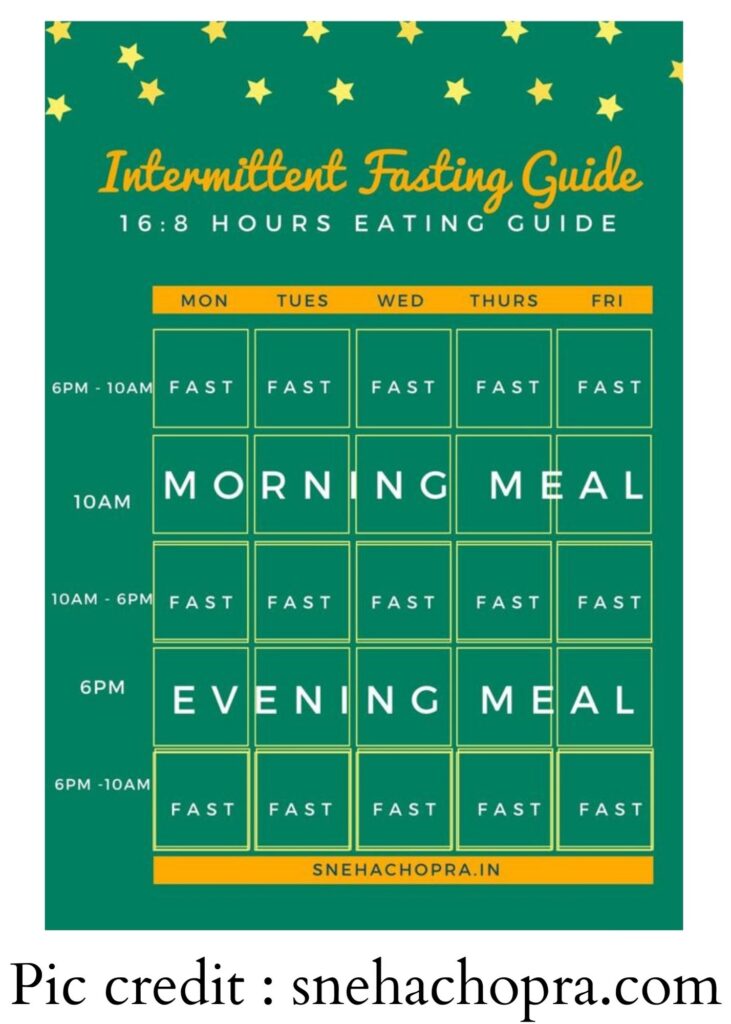
Intermittent Fasting is not a diet, it’s a pattern of eating which is 16:8. Scheduling your meals so that you get the most out of them. Intermittent fasting doesn’t change what you eat, it changes when you Eatwell, most notably, it’s a great way to get lean without going on a crazy diet or cutting your calories down to nothing. Many times you’ll try to keep your calories the same when you start intermittent fasting. Intermittent fasting is a good way to keep muscle mass on while getting lean.
How intermittent fasting leads to fat loss in a Moment and also helps many diseases also.
Step 1:
this, we eat good fats and victims and minerals and remove all the bad fats and things that are harming us and incorrect quantity which is more important in it. This helps us to get back in shape. TO be fit it requires very little behavior change in habit which is good for healthy living.
Step 2:
A Very good thing About intermittent fasting falls into the category of “simple enough that you’ll actually do it, but meaningful enough that it will actually make a difference.”In this, you eat good qualitative food like fruit, vegetable and nuts and eggs and many more Things which is required for your balanced diet and in required quantity.
Step 3:
This fasting helps to get people back with confidence and also helps change their lifestyle which is more important for us these days as everyone these days wants to fit in.
Eg – All of us are aware with the COV-19 we all are sitting at home and doing the work and not doing physical tasks. Before this COV-19 we are going to the office and we are on the proper route and doing some physical activities which are more important for the body to burn fat. But due to this cov19, we are sitting at home doing work that destroys our lifestyle and due to this we also know that hormonal problems have increased and people have to gain a lot of weight loss and suffer from many diseases.
Many people celebrate and people who have started intermittent fasting have lost their weight like Bharti Singh who lost 16 kg with intermittent fasting.
To understand how intermittent fasting leads to fat loss we first need to understand the difference between the fed state and the fasted state.
Your body is in the fed state of digesting and absorbing food. The fed state starts when you begin eating and lasts for three to five hours as your body digests and absorbs the food you just ate. When we are in a fed state, it’s very hard for our bodies to burn fat because our insulin levels are high
After some time our body goes into the process of a postabsorptive state, which is just a fancy way of saying that your body isn’t processing a meal. The post-absorptive state lasts until 8 to 12 hours after your last meal, this time we enter the fasted state. It is much easier for your body to burn fat in a fasted state because your insulin levels are low.
When you’re in the fasted state your body can burn fat that has been inaccessible during the fed state. We don’t enter the fasted state until 12 hours after our last meal, this much time our body requires to digest the food.
The main reasons why many people start intermittent fasting will be to lose fat without changing what they eat, how much they eat, or how often they exercise is affecting their body.
Fasting puts your body in a fat-burning state that you rarely make it to during a normal eating schedule.
The Benefits of Intermittent Fasting
Leangains are called intermittent fasting. 16–hour fast followed by an 8–hour eating period. Intermittent fasting was popularized by Martin Berkhan of Leangains.com, which is where the name originated.
It doesn’t matter when you start your 8–hour eating period. You can start at 9 am and stop at 5 pm. I tend to find that eating around 1 pm and 8 pm works well because those times allow me to eat lunch and dinner with friends and family. Most people already “fast” every day, while they sleep. Intermittent fasting can be as simple as extending that fast a little longer.
You can do this by skipping breakfast, eating your first meal at noon, and your last meal at 8 pm. Then you’re technically fasting for 16 hours every day, and restricting your eating to an 8-hour eating window. This is the most popular form of intermittent fasting, known as the 16/8 method.
Hunger is not that big of an issue, although it can be a problem in the beginning, while your body is getting used to not eating for extended periods of time.
No food is allowed during the fasting period, but you can drink water, coffee, tea, and other non-caloric beverages. Some forms of intermittent fasting allow small amounts of low-calorie foods during the fasting period.
When practicing intermittent fasting, working out in the morning can be super beneficial.
Since it is near the end of your fast, your body’s insulin levels have hit their baseline, meaning that your body is no longer storing fat, but rather is burning it.
Therefore when you work out, you are burning solely to store body fat.
How much weight can you lose in a 16: 8 diet?
According to the studies published in Molecular and cellular endocrinology who have found out on average,
someone whose weight is just 90 kg would lose 5%of their total body weight in the 10week period.
someone needs to do correct exercise and diet only then he or she can lose 11 pounds in 10 weeks.
For good weight loss try to follow food on 16:8 diet
Whole grains like – rice, oats barley, whole grain pasta, and quinoa will keep you fuller for longer.
Protein meat, poultry, fish, eggs, nuts, and seeds will keep you full.
Fruit: Apples, bananas, berries, oranges and pears will offer good vitamin sustenance.
Vegetables: Broccoli and leafy greens are especially good for making sure you’re eating enough fiber.
Healthy fats: Olive oil, coconut oil, avocados.
Intermittent Diet – as follow below for 1 day
If you are struggling shedding weight. You can talk to us by taking this assessment: Click here